


Ana Schurmann is a classical composer, singer-songwriter, multi-instrumentalist, researcher, philosopher, innovative designer, model, humanitarian, and artist in her twenties.
One method. Many bodies.
Ana does not have nine careers. She has one method with many outputs: she takes invisible physical phenomena — principally gravitational-wave data from the LIGO–Virgo–KAGRA observatories — and gives them a form a human body can receive. Through the ear, the eye, the hand, the mouth, the skin.
Every one of the nine disciplines is a consequence of that sentence, not an item beside it. One signal, many bodies — the same line, never broken:
Where each discipline lives
The same brain, region by region. Touch an area to hear it, and go to the work it makes.
In 2025, she pioneered a new intersection between astrophysics and musical composition by becoming the first composer to scientifically translate gravitational-wave signals from the LIGO–Virgo–KAGRA observatories into a “Scientific Universe Symphony,” utilizing a harmonic and chronological order method of signal extraction. A polyglot fluent in nine languages, she holds certifications from ITA and INAF, and she presented both her method and the symphony live at the IXI EFITA. Her multilingual and multi-genre contributions to music earned her a Forbes 30 Under 30 list in 2023.
As a member of the Recording Academy, Ana has written more than 500 songs, with BBC Radio UK featuring works such as “Tell Me,” “Ferdoff LXXIII,” “Flume XI,” and “Horus Audenis.” Alongside her musical achievements, her highly successful modeling career spans more than 157 publications and includes collaborations with renowned brands like Vogue, Harper’s Bazaar, Dior, Calvin Klein, Tommy Hilfiger, and Max Mara.
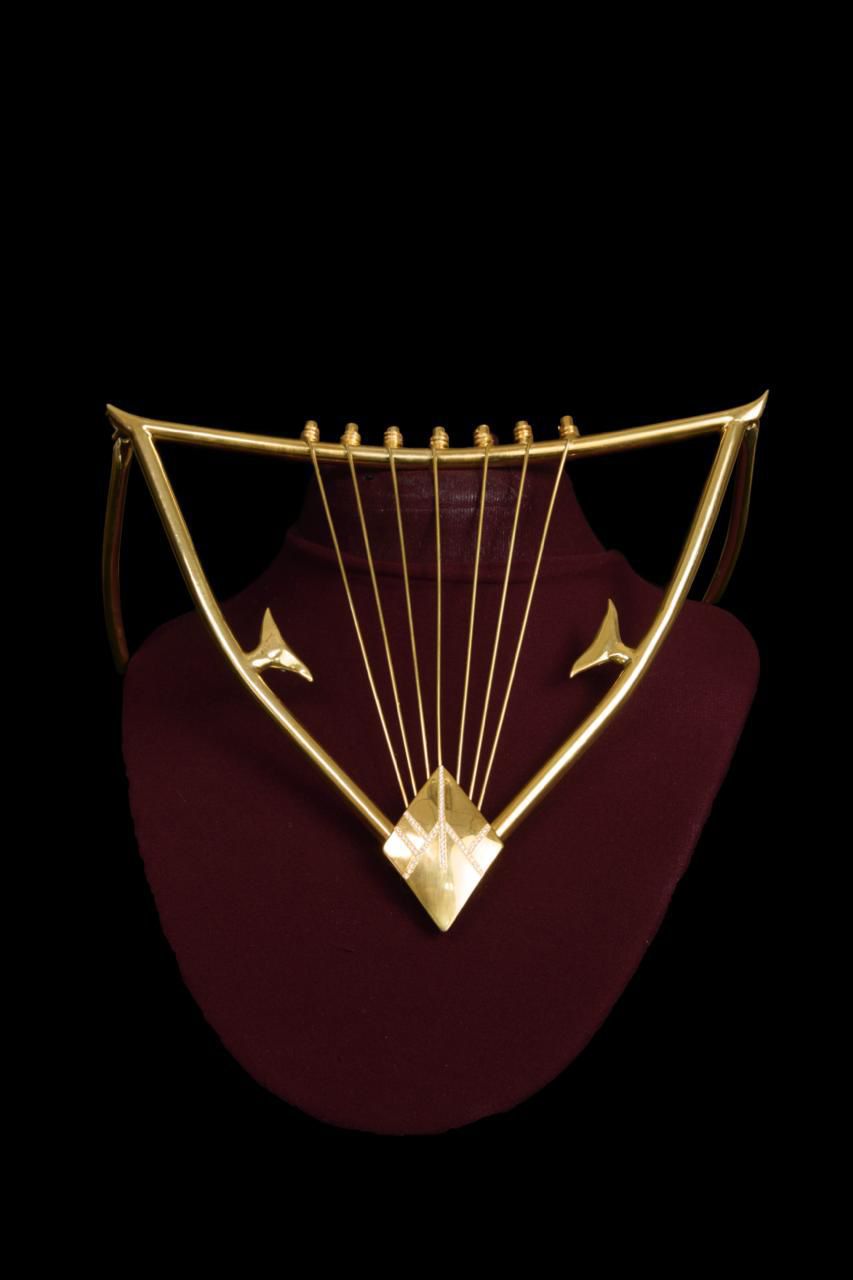
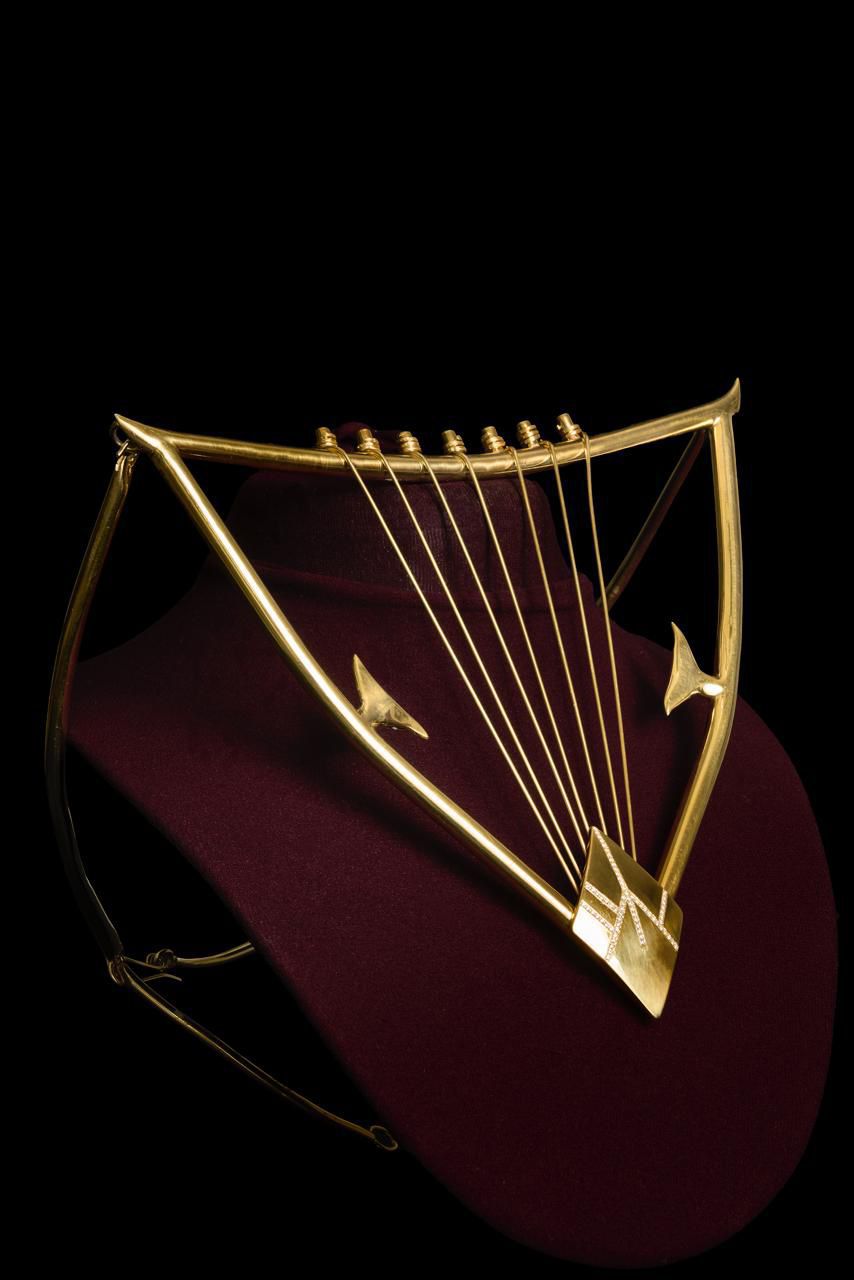
Seamlessly merging science, philosophy, fashion, sustainability, and performance art, Ana has developed a sustainable luxury design method centered on multifunctional couture garments. This includes inventing the world’s first “umbrella dress” method and creating a transformative couture concept capable of becoming 23 iconic fashion pieces within a single design. Furthermore, she is the creator of the Neck Lyre — the world’s first haute-jewelry scientific multi-instrument — which is designed to be played in upcoming live presentations that integrate music, science, and wearable art.
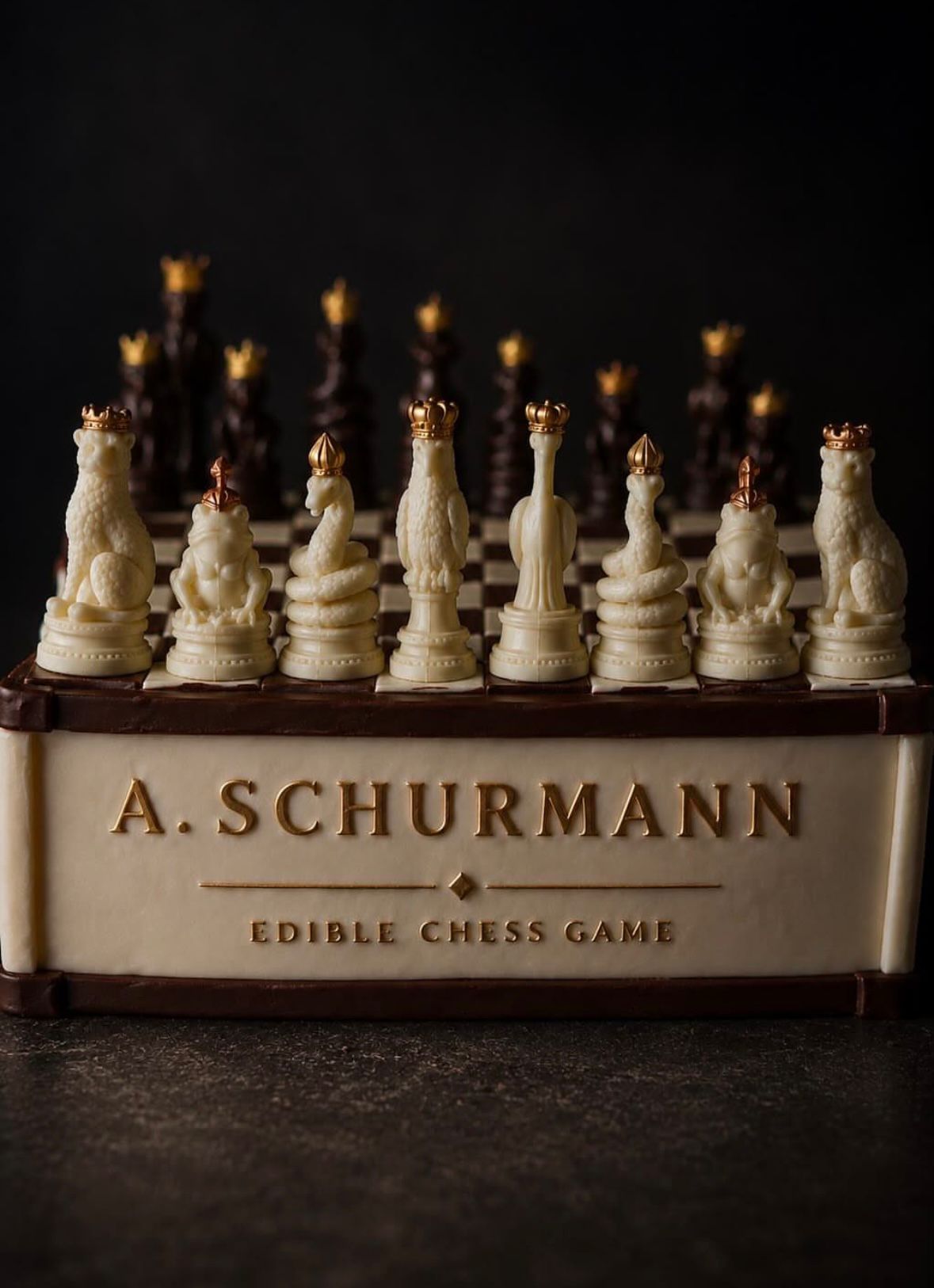
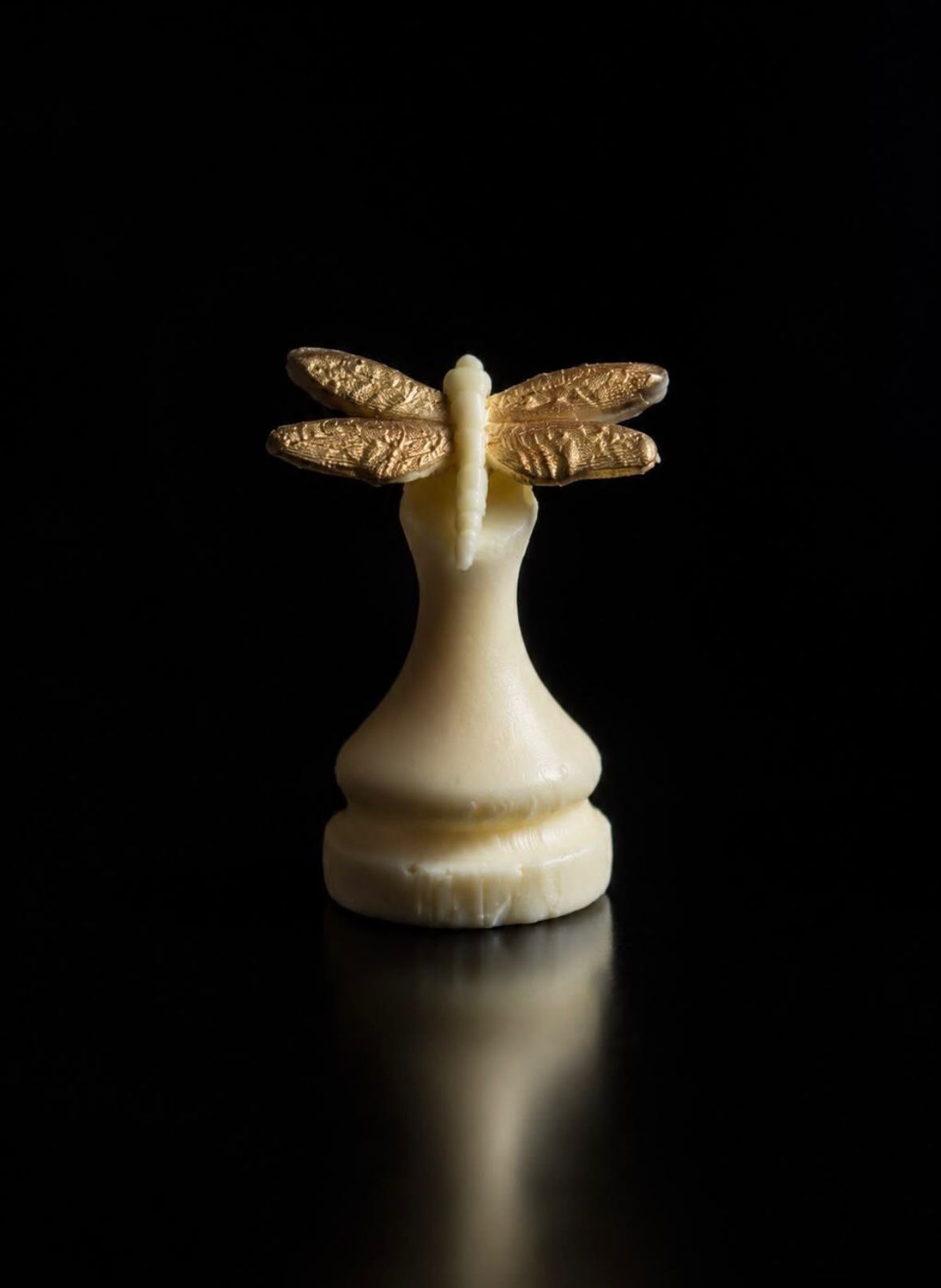
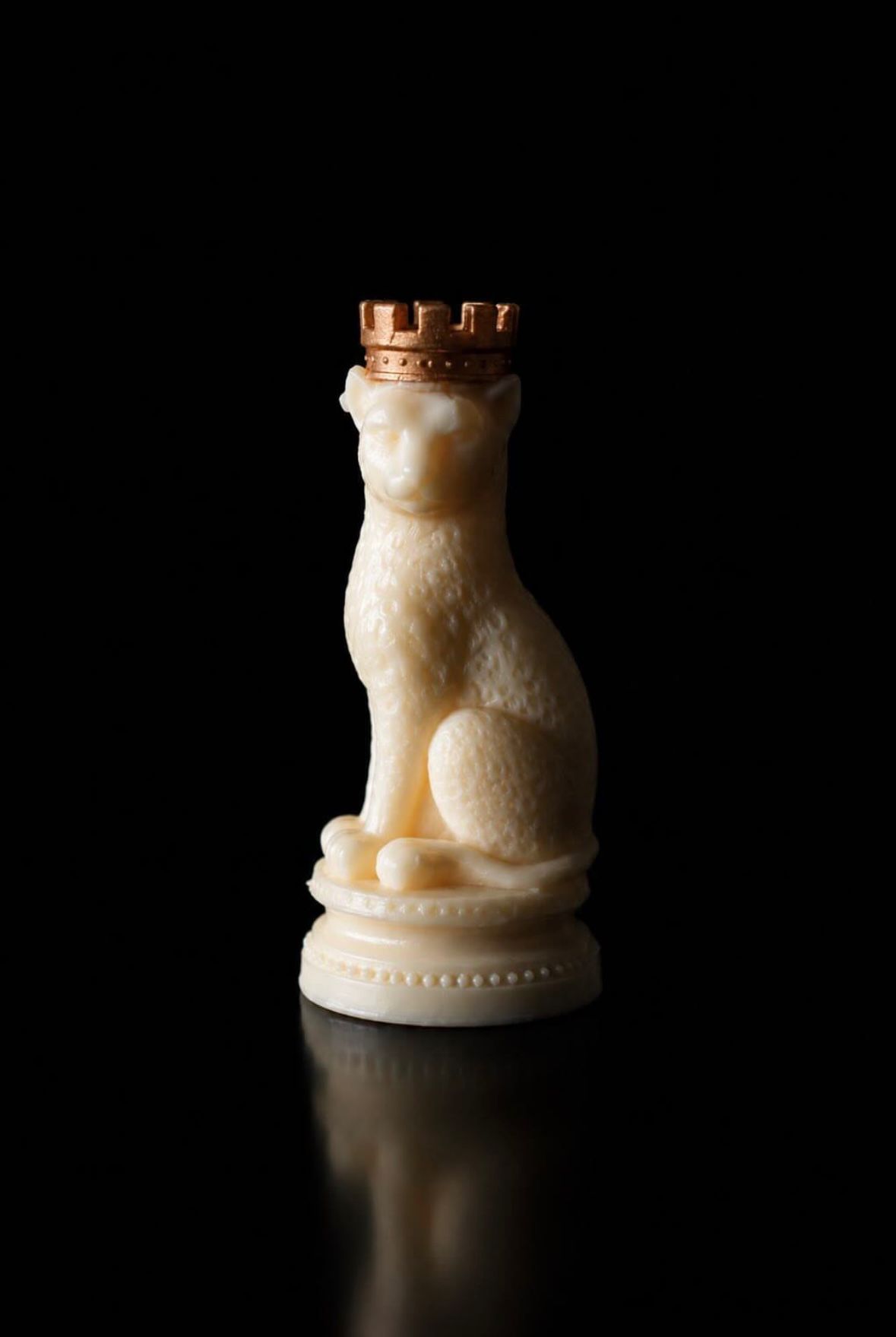
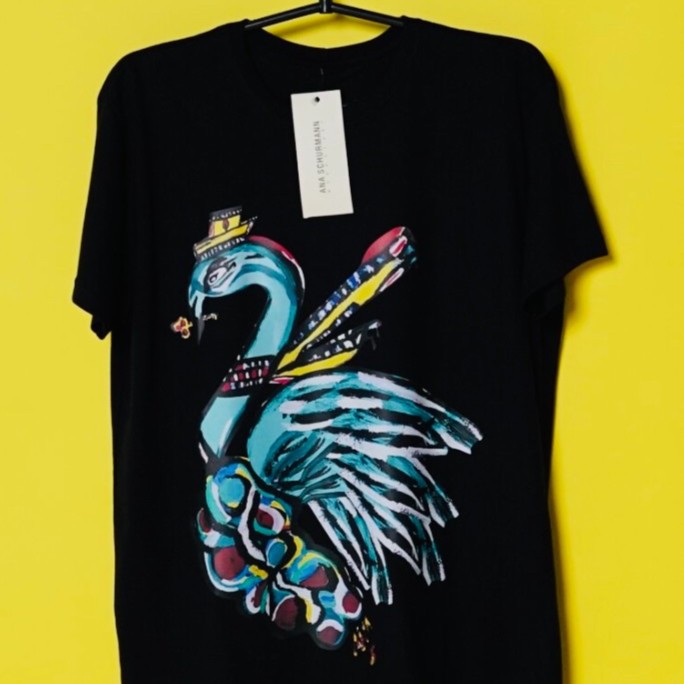
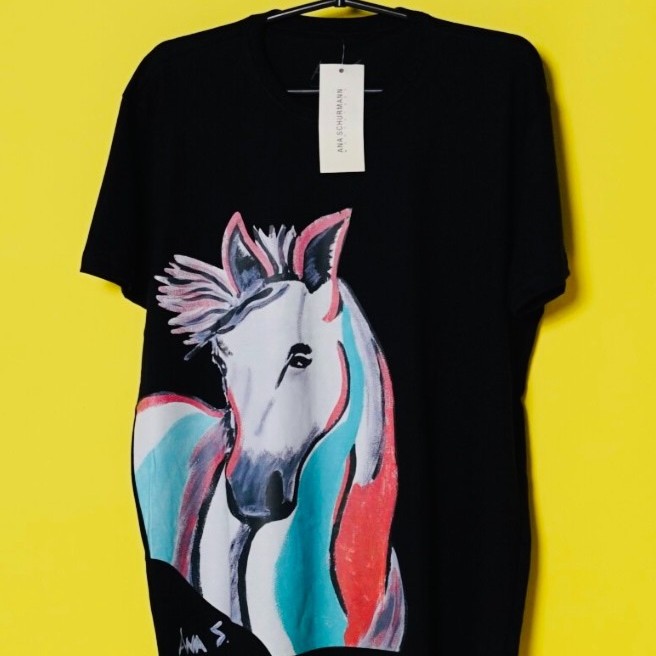
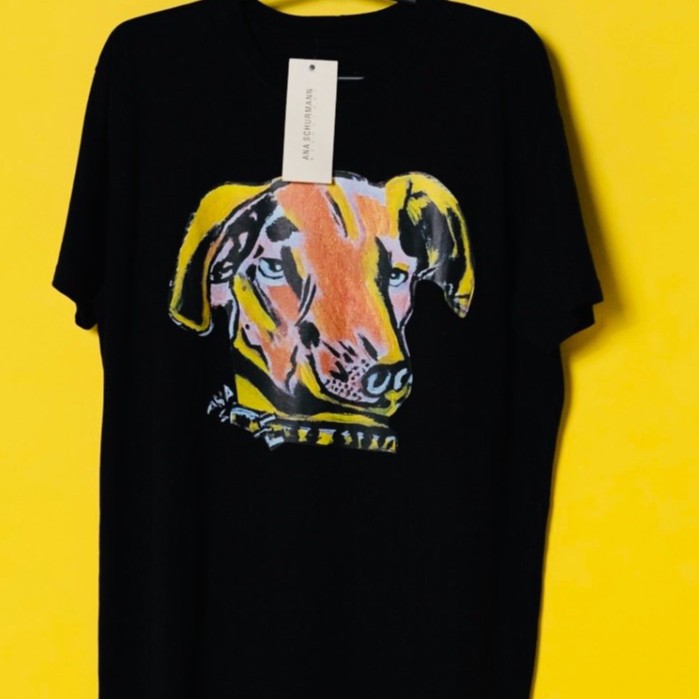
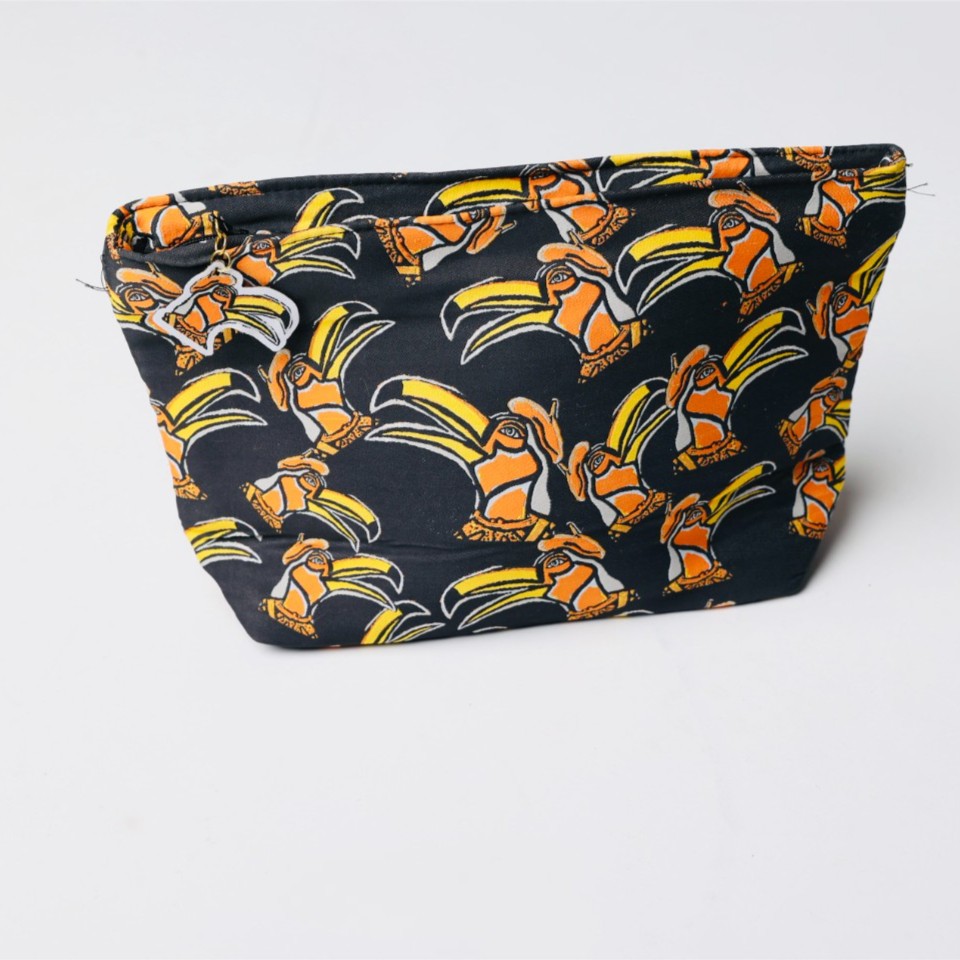
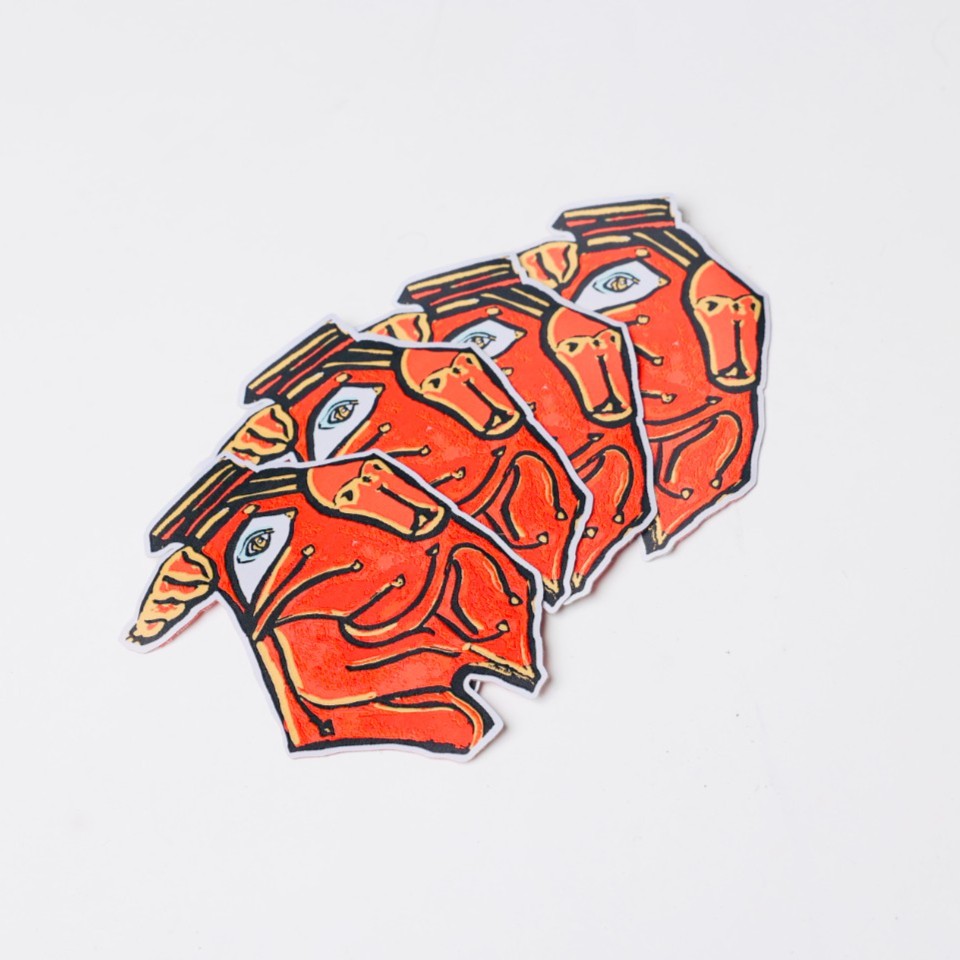
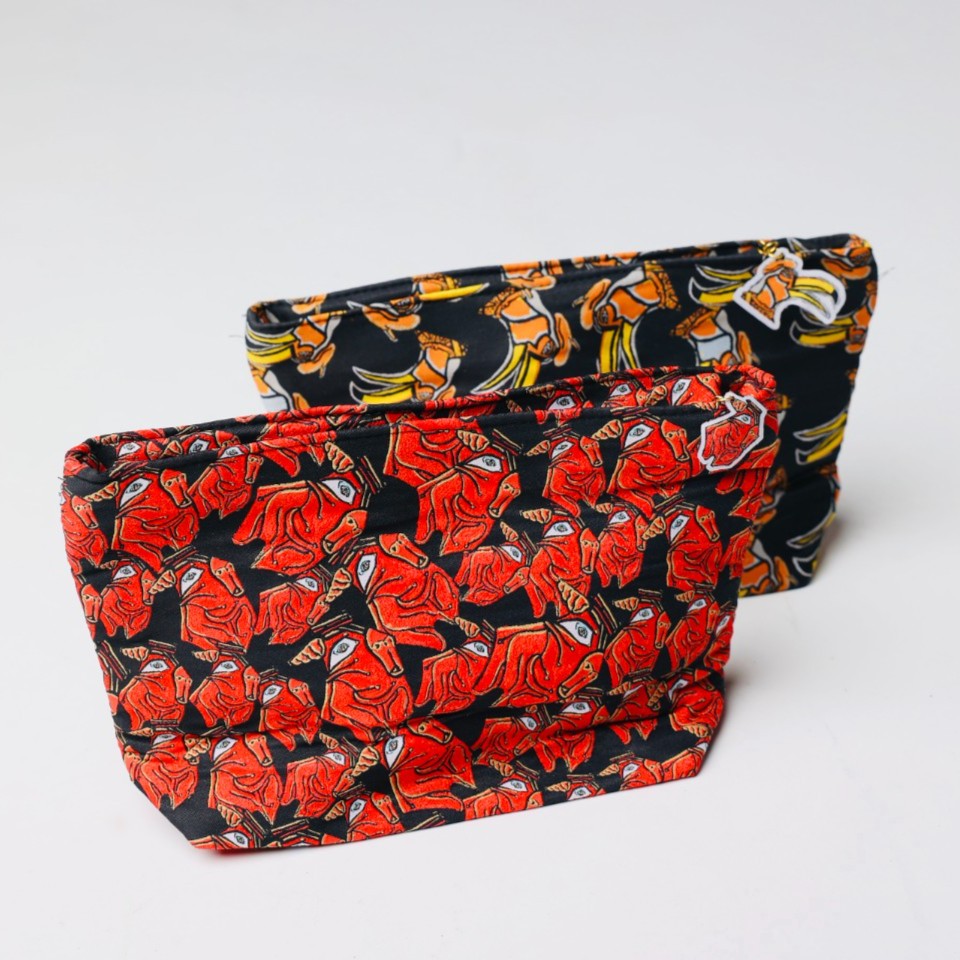
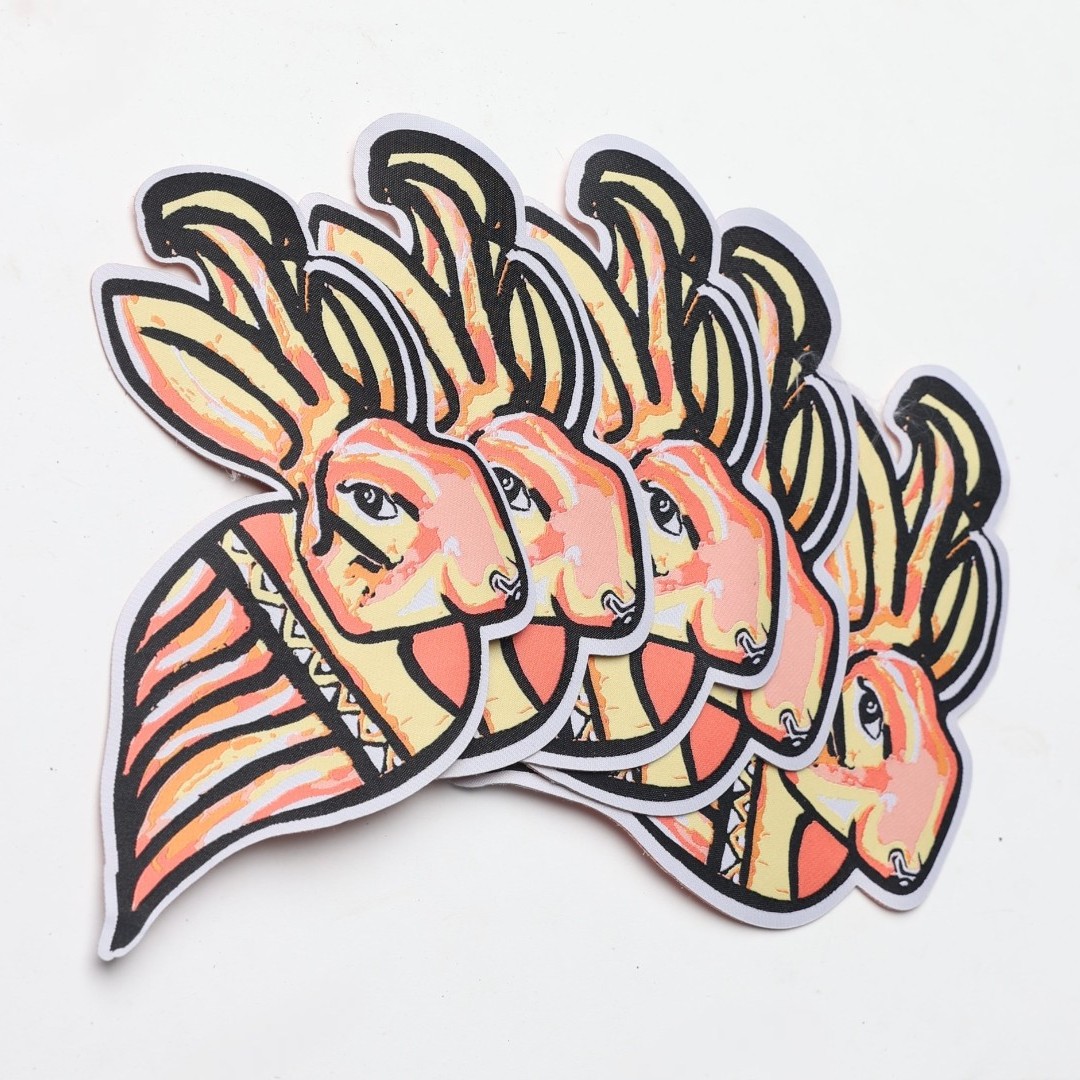
Her boundless creativity extends into highly unique interdisciplinary projects, from conducting experiments on sonified sourdough using gravitational wave detections to designing and partnering on an edible chess game, sandboards, and various other products featuring her art.
Rounding out her expansive portfolio, Ana is the author of two philosophical books, the creator of 87 acrylic artworks and 13 music videos, and the developer of 182 products dedicated to promoting social and animal awareness through art.

Every detection is a movement
The Harmonic Universe treats the LIGO–Virgo–KAGRA catalogue as one continuous composition in chronological order. Below is every confident detection of the first three observing runs — 90 events, from GW150914 on 14 September 2015 to March 2020 — placed by date and total mass, from the Gravitational Wave Open Science Center. Touch a detection to hear its chirp, synthesised from the chirp mass in the catalogue; play the whole catalogue to hear the universe in the order the symphony does.
Music
The World of Videos
Drag the world · tap a cover to play


A Recording Academy member, Ana has written more than 500 songs, with BBC Radio UK featuring works such as “Tell Me”, “Ferdoff LXXIII”, “Flume XI” and “Horus Audenis”. Her modelling career spans more than 157 publications and collaborations with Vogue, Harper’s Bazaar, Dior, Calvin Klein, Tommy Hilfiger and Max Mara.
Her work merges science, philosophy, fashion, sustainability and performance art.
Music Videos
 On Us - Ana Schurmann, Camerata Florianópolis
 Heaven - Ana Schurmann (Part II)
 Ana Schurmann - Your Voice (Live at Isaac Theatre Royal)
 Tempus Loss - Ana Schurmann, Luiz Zago
 The World Of Blues - Ana Schurmann
 Heaven is Coming. 🎵
 Ana Schurmann "Wonder" (Live Performance) | LONDON LIVE SESSIONS
 Curi V by Ana Schurmann (Wearing Ana Schurmann Couture)
 Ana Schurmann x Ely Yabu - Tell Me Remix (Official Video)
 My Dear, Word - Ana Schurmann, Ensemble Reunis (Live Performance in Cagliari)
 ROOM (Hear Me Now) - Ana Schurmann, Official Music video
 Verdi XLIII (Wearing Ana Schurmann Couture)
 WHITKEYS - Ana Schurmann (Genre 6)
 Max Mara | Spring Summer 2022 | Full Show
 SACRÁRIO - Ana Schurmann , Daniel Galvão
 CATWALK (Ethical Terms) - Ana Schurmann (Official Video)
 TRUTHALIDADE - Ana Schurmann
 Ana Schurmann - Libertà
 Poésie du Dimanche - Remix (Lyric Video)
Live Performances
Ana Schurmann "Wonder" (Live Performance) | LONDON LIVE SESSIONS On Us Live From Florianópolis - 100 Years of Hercílio Luz Bridge
 Ana Schurmann "Rapanui" (Live Performance) | LONDON LIVE SESSIONSMy Dear, Word - Ana Schurmann, Ensemble Reunis (Live Performance in Cagliari)Curi V by Ana Schurmann (Wearing Ana Schurmann Couture)
 Avium II (Live) - Ana Schurmann


Music Sheets


 My life as an Artist. (And how I became one)
Ticket Access
Sign up for Concert Dates, Announcements and Events
Model
 Models.com
Editorial
 Shot by Rafael Pavarotti
 Shot by Henrique Gendre
 Shot by Mehmet Erzincan
 Shot by Jamie Nelson
 Shot by Lucia Giacani
 Shot by Mateusz Stefanowski
 Shot by Zee Nunes
 Shot by Daniel Jackson · Dior
 Hunger Magazine
 Shot by Jamie Nelson · Vogue Latin America
 Max Mara campaign
 Shot by Jamie Nelson · Vogue Latin America
 Ana Schurmann Couture
Press


Design
Ana developed a sustainable luxury design method centred on multifunctional couture garments, including the world’s first “umbrella dress” method and a transformative couture concept capable of becoming 23 iconic fashion pieces within a single design.
She is also the creator of the Neck Lyre — the first haute-jewelry scientific multi-instrument — designed to be performed in upcoming live presentations integrating music, science and wearable art.


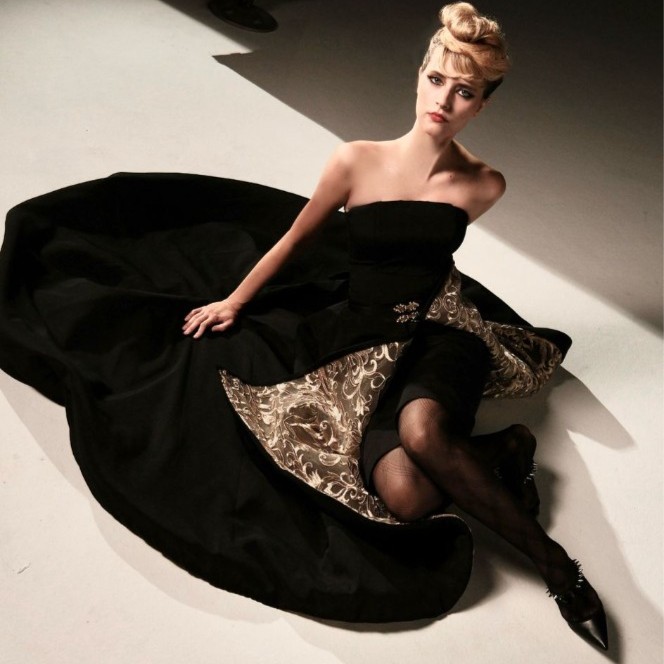
One Dress, Twenty-Three Pieces — Metamorphosis Viewer
Drag to morph
 Inside Ana Schurmann Couture Atelier - Creating the Umbrella Multifunction Dress ©️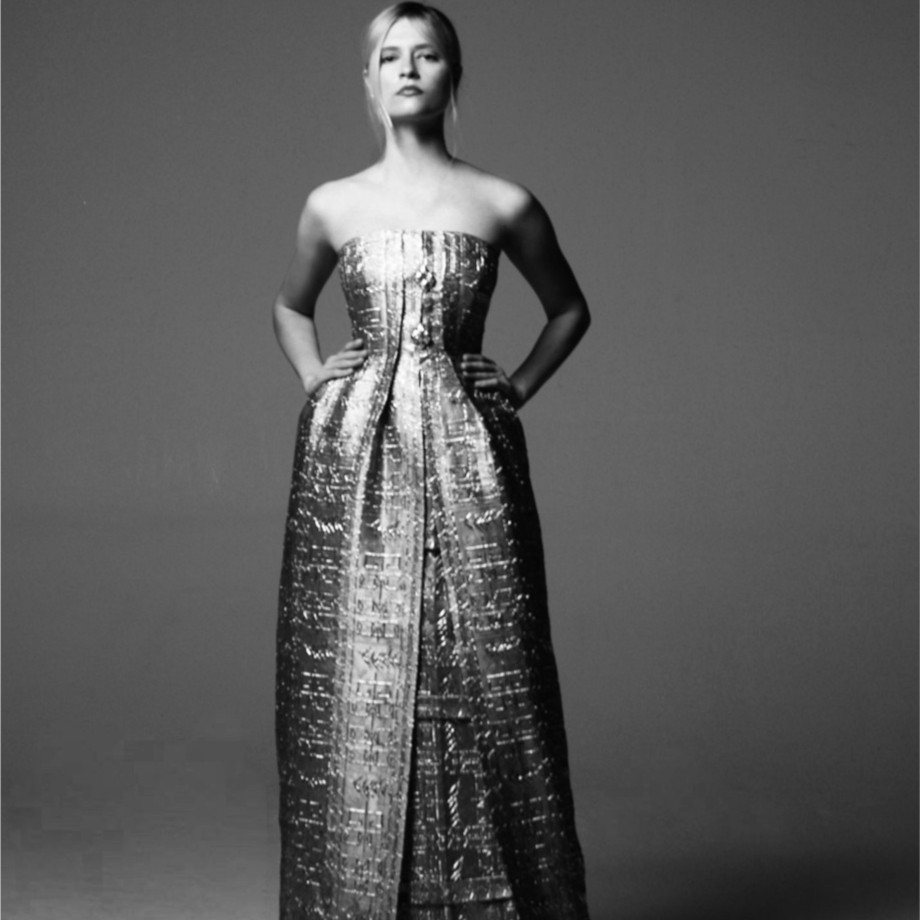

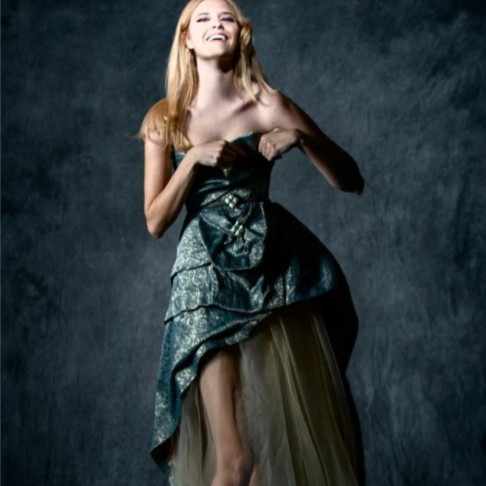
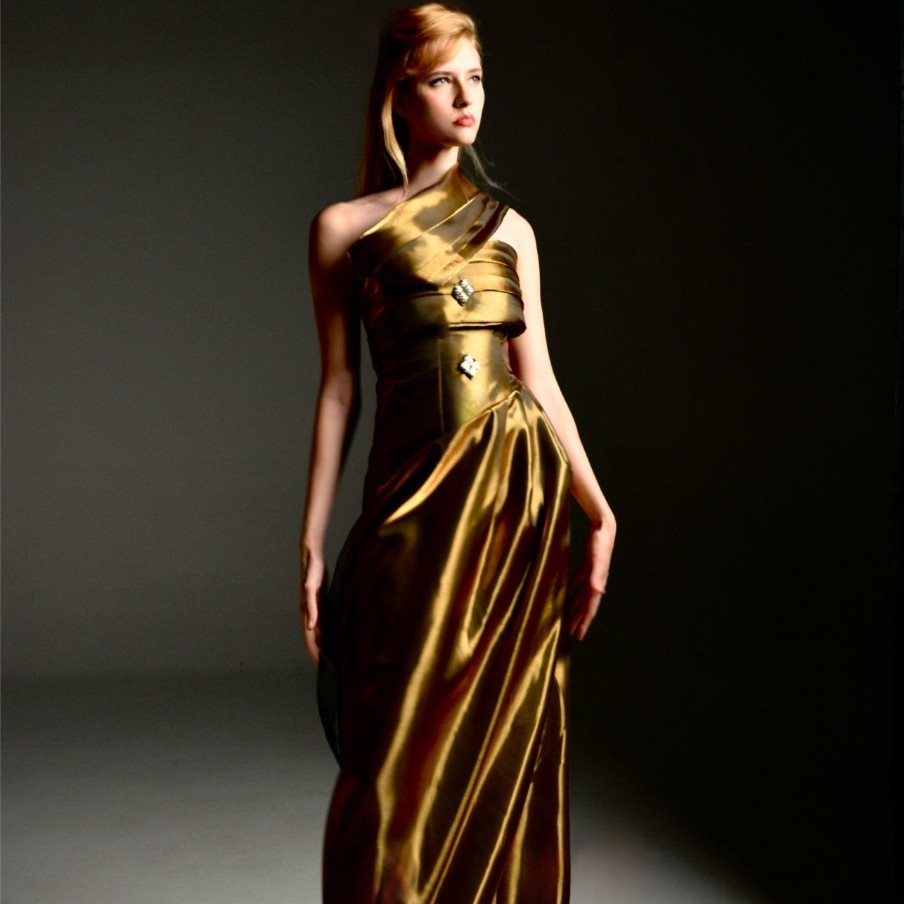
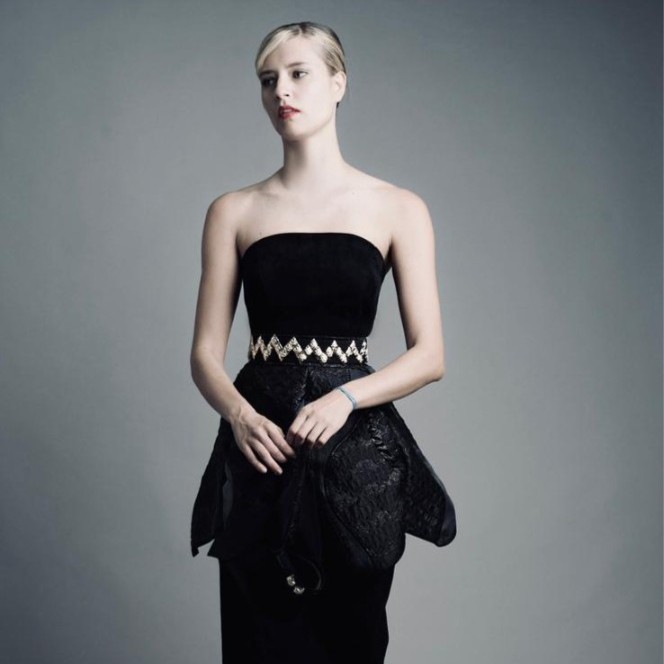
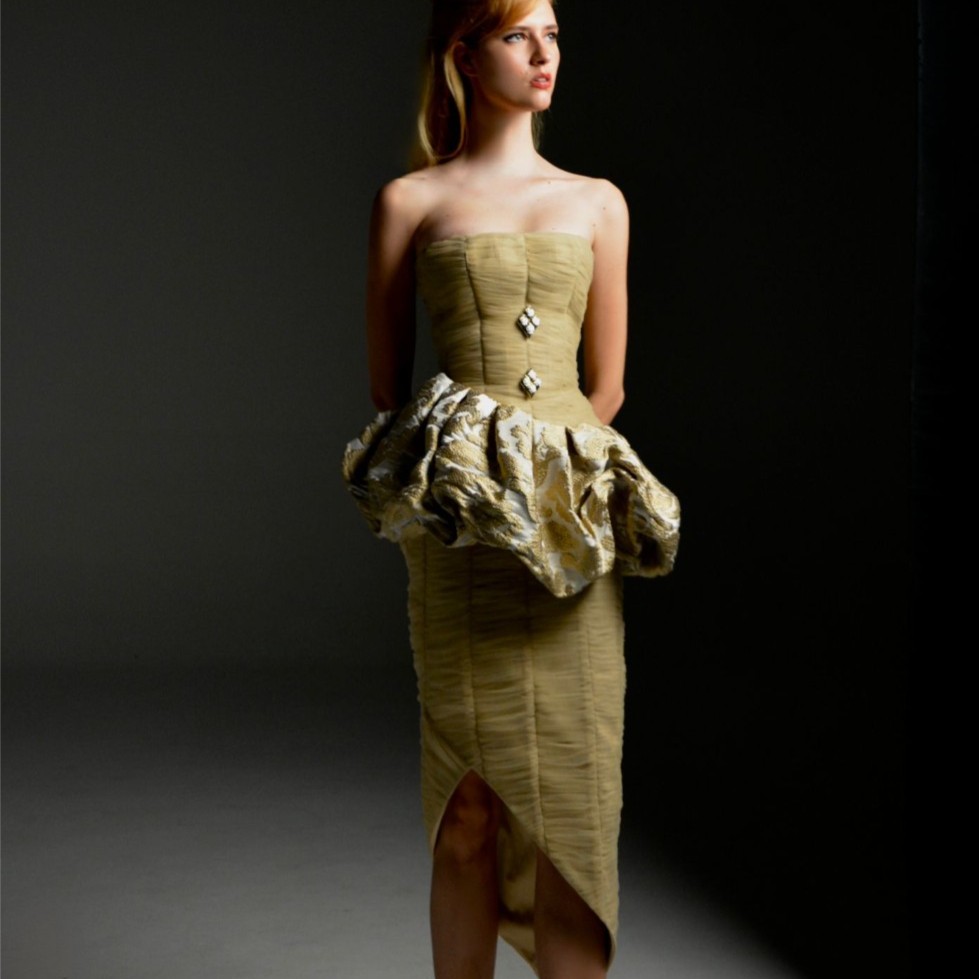







 Ana Schurmann Haute Couture Live At Teatro Doglio


The Plate
Tap a collection · open a pieceLiterature
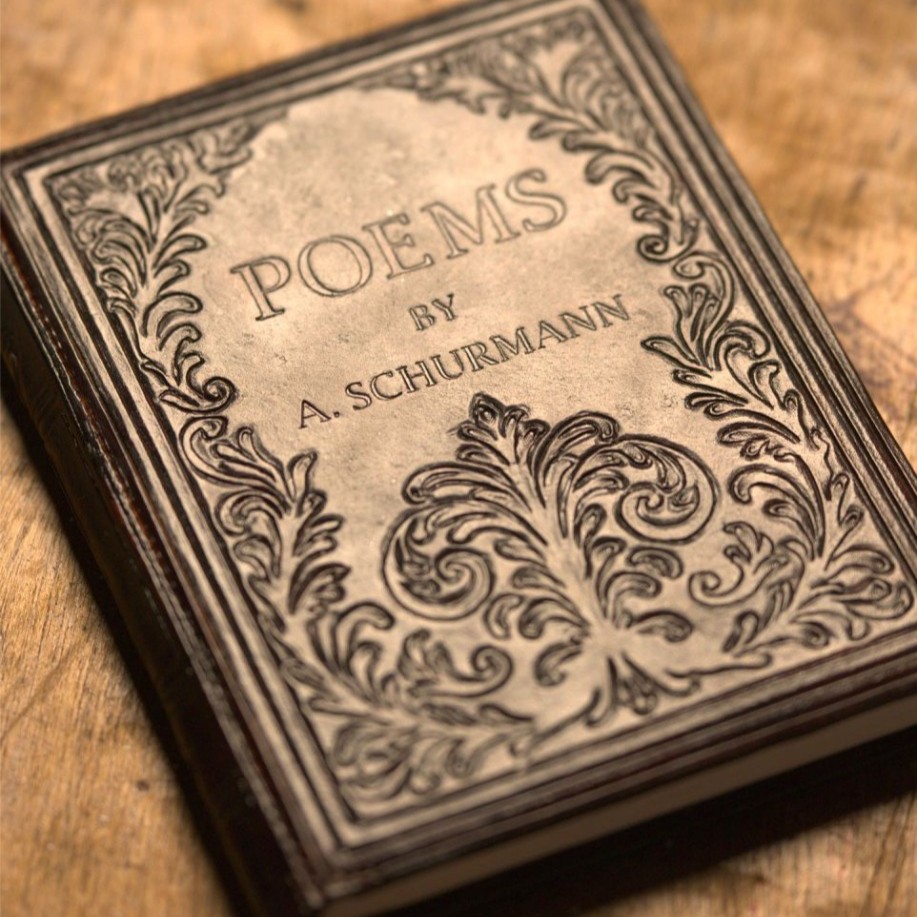
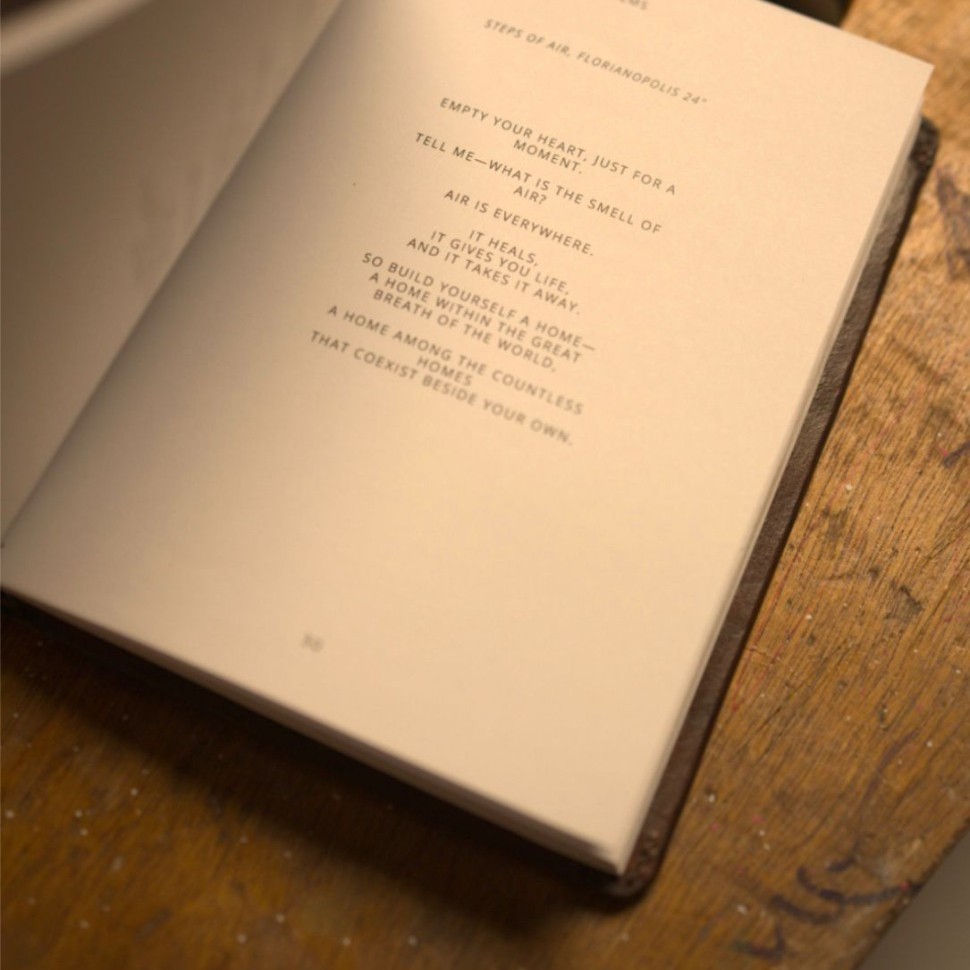
 Poems by A. — reading
Science
Every detection is a movement
The Harmonic Universe treats the LIGO–Virgo–KAGRA catalogue as one continuous composition in chronological order. Below is every confident detection of the first three observing runs — 90 events, from GW150914 on 14 September 2015 to March 2020 — placed by date and total mass, from the Gravitational Wave Open Science Center. Touch a detection to hear its chirp, synthesised from the chirp mass in the catalogue; play the whole catalogue to hear the universe in the order the symphony does.
Transforming gravitational-wave detections into musical structure
Gravitational Wave Symphony · by Ana Schurmann · pages 32–33
Ana’s own account, in the LIGO Scientific Collaboration’s magazine, of the method behind The Harmonic Universe: six detections from the LIGO–Virgo–KAGRA catalogue, each chirp translated directly into pitch and arranged by redshift, from the oldest event to the most recent — and of the collaborations that followed, from Virgo in Pisa to tetrachromatic vision, birdsong and stellar evolution.
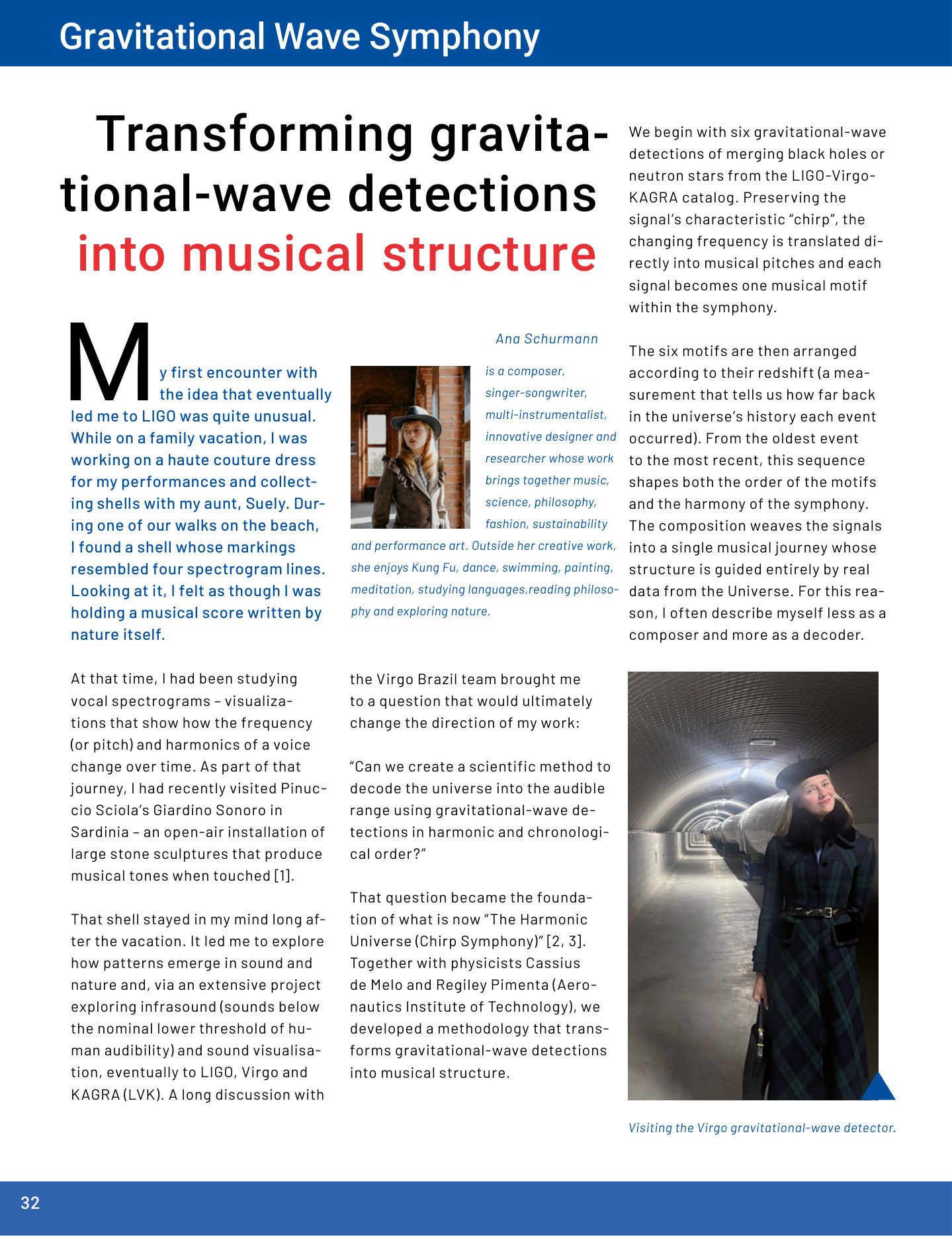
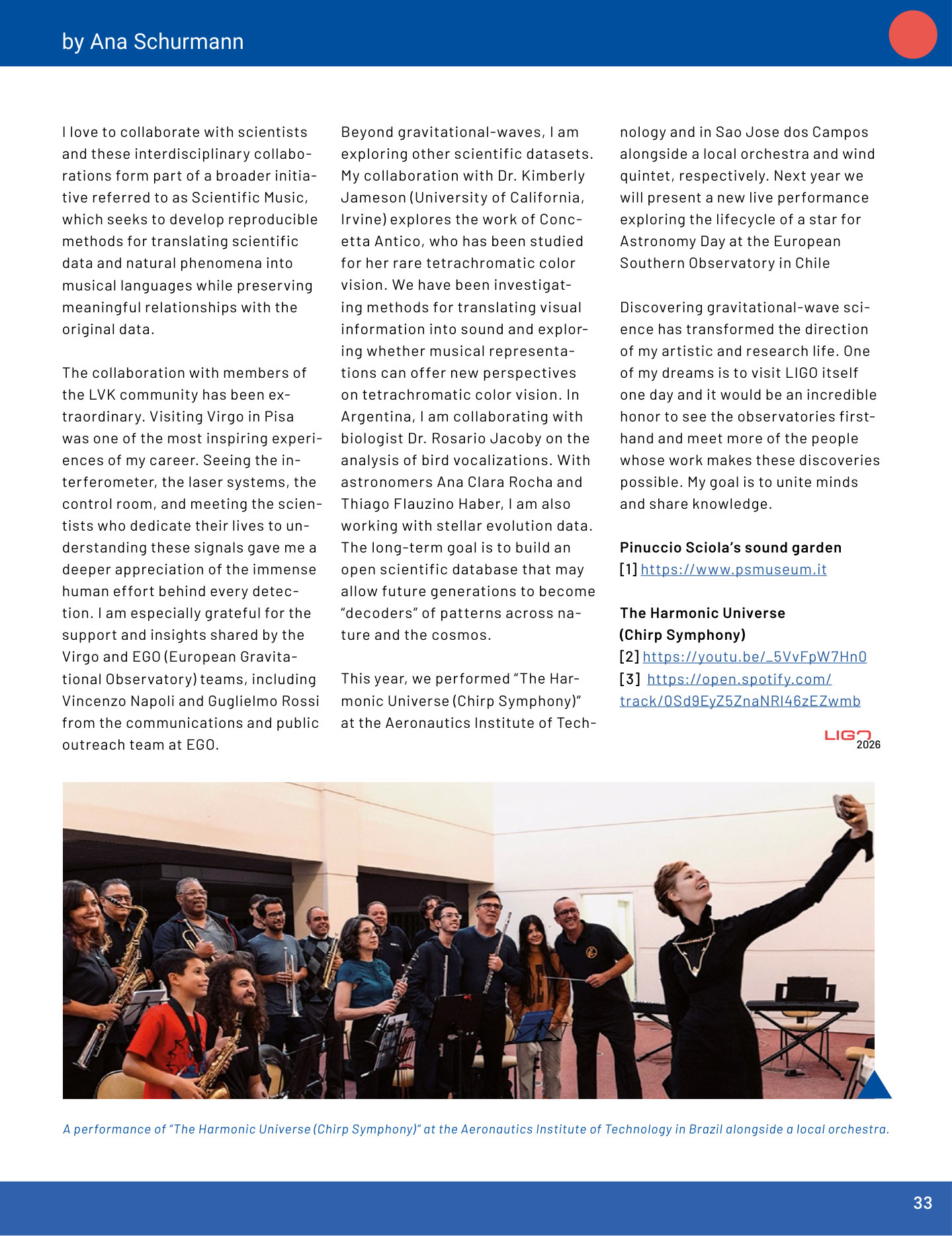
A. Schurmann, “Gravitational Wave Symphony: Transforming gravitational-wave detections into musical structure”, LIGO Magazine, issue 29, pp. 32–33, September 2026. LIGO Scientific Collaboration.

Ana is the first artist in history to create a scientific method to translate gravitational-wave chirps data into a scientific piano Universe symphony, entitled The Harmonic Universe, Chirp Symphony (2025). Her interdisciplinary research established pioneering methodology for the artistic sonification of transient gravitational-wave signals generated by the LIGO–Virgo–KAGRA observatory network, developed through formal scientific collaboration with the Aeronautics Institute of Technology (ITA), receiving a certificate for her achievement and support from International LVK Collaboration and Instituto Nazionale di Astrofisica (INAF). Her wider oeuvre, including works such as Philosophari in Numeris consistently merges abstract mathematical structures and empirical scientific datasets as foundational compositional elements.
Songs “Tell Me,”, ”Ferdoff LXXIII”, ”Flume XI” featured on BBC Radio, and “Whitkeys,” a long-running No.1 on Deezer Italy, earned her a place on Forbes Brazil’s 30 Under 30 list.
 Decoding First 30-Second Spike Spectrogram Shell Fragment Matching 19th-Century Music
 Live from EFITA at the Institute of Technology and Aeronautics (ITA)
 Bird Polyphony — Is there more to Music than human hearing has taught us to recognize?
 Symphony of the Universe: How We Translate Gravitational Waves into Music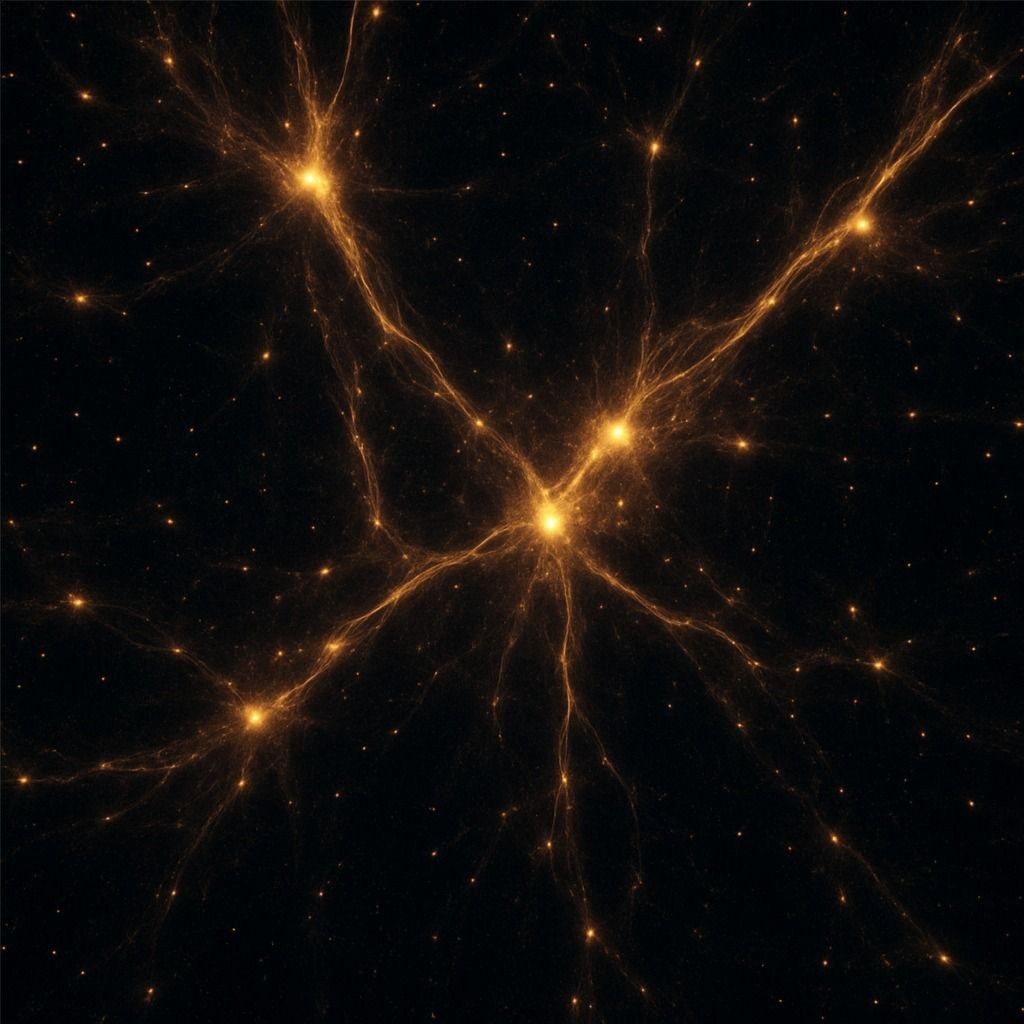
Can you hear the difference?
Two sequences of tones. Both built from a list of numbers by exactly the same rule — each number becomes a pitch, nothing tuned by hand. One list is random. In the other, the numbers push each other apart. Nobody told you which is which.
Listen to both, then say which one sounded more evenly spread.
Headphones help. About four seconds each.
Look at the two pictures above. Each vertical line is one number in the list.
Random and independent. Lines fall where they like, so they clump — some crowd together, some leave gaps. That clumping is what you hear as unevenness.
The numbers repel each other. Two never sit close, so the sequence comes out spread and regular. This is the fingerprint of a whole class of physical systems.
If you couldn’t tell, that’s a real answer and worth reporting. Whether untrained listeners can separate these by ear is an open question — the study runs it as a formal test.
What this is
A spectrum is just an ordered list of numbers — the energy levels of an atomic nucleus, the eigenvalues of a symmetry group, the heights of the zeros of the Riemann zeta function. Written down, they are a column of digits. Turned into pitch, they become something an ear can judge in seconds.
The research applies one identical pipeline to systems from physics, number theory and geometry: extract the spectrum, measure the spacings, sonify. Because nothing is adjusted between systems, what stays the same and what changes both carry information.
What is claimed
- Level repulsion is genuinely shared between random matrices and the Riemann zeros — reproduced here from first principles, without fitting.
- The pipeline is validated on systems whose answers are already known before any new claim is made.
- Every number carries an uncertainty , and comparisons are calibrated against synthetic spectra of the same size.
What is not claimed
- No hidden physical unity. These systems are not secretly the same thing. The unification is one of method and listening.
- Prime gaps are not GUE. They are approximately Poisson — a correction to the project’s own earlier draft.
- The nuclear spectrum is undecided. Thirty-five spacings are too few to identify a class, and no conclusion is drawn from it.
The aim is not novel physics but a rigorous and audible cartography of spectral structure.Spectral Statistics as a Shared Language · revised June 2026
Audio is synthesised live in your browser from the paper’s mapping: each level becomes a tone at f = 220 · 8^t Hz, notes 120 ms apart, additive synthesis. Nothing is pre-recorded and nothing is tuned by ear.
Audible Cartography
One analytical pipeline, applied identically to an atomic nucleus, a symmetry group, and the zeros of the Riemann zeta function. Each spectrum becomes a sound. Choose a system and listen — then hear the same spectrum through an ear that is not yours.
The bench
Every system below is reduced to an ordered set of eigenvalues, then mapped to pitch by the same logarithmic rule — f = f_min (f_max / f_min)^t, 220 Hz to 1760 Hz, three octaves centred on A. Nothing is tuned by hand. What you hear is the spacing.
Two honest caveats, because they are the point. These demonstration spectra hold a few dozen levels, not the thousands the paper uses — so the interval is wide, and pressing New draw will move the estimate around by more than the gap between GOE and GUE. That is not a flaw in the demo; it is what small samples do, and it is why the paper’s nuclear result at n = 35 is reported as undecidable.
σ here is deliberately unreliable, and labelled as such: it is computed after dividing by the global mean spacing, which is not unfolding. Its value drifts away from the theoretical figure — sometimes above, sometimes below — depending on where the sample sits in the spectrum. Press New draw and watch it wander while ⟨r̃⟩ stays put. That contrast is the whole argument for leading with the ratio statistic.
A listening bench · a nucleus, a symmetry group, the zeros of zeta · one map
Where it lands
The same measurement placed on one axis. Rigid spectra sit left, uncorrelated ones right. The point moves as you change system.
Whose ears?
A spectrum has no sound of its own. It becomes audible only inside a hearing range — and hearing ranges are themselves an evolutionary record, reconstructed from the length and shape of the cochlear duct. Pick an ear. The spectrum does not change; the listener does.
Read this before quoting any of these numbers. The four living animals have behavioural or physiological audiograms, cited on each card. The two extinct ones marked * do not, and the difference is not a technicality.
The Tyrannosaurus figures come from a single cochlear duct measurement pushed through a regression calibrated on living birds — and Sakagami & Kawabe state in the paper that the value lies outside the range of that calibrating data, so it had to be extrapolated. No lower frequency limit for T. rex has ever been published; any figure you see quoted for one is invented. The Parasaurolophus band is worse: the numbers in circulation trace back to a conference abstract and to secondary sources, and they disagree by more than an order of magnitude. It is shown here as a span of disagreement, not a result.
Manley & Köppl (2025, Biology Letters 21:20240680) — Manley being a co-author of the original method — warn that inferences from cochlear length alone are “stretched beyond what can reasonably be gleaned from fossil data.” That warning applies to this page too, and is the reason these two cards are marked and dimmed rather than presented as equals.
One consequence worth hearing: select the bat and press play. Its range begins above almost all of this music. A big brown bat could stand in the room and hear essentially none of it — which is the point of the section.
What is and isn’t claimed
The systems on this bench are not physically related, and this work does not claim they are. What is shared is a method: one pipeline, one mapping, applied identically, so that similarities and differences both mean something.
| System | n | ⟨r̃⟩ (paper) | Reading |
|---|---|---|---|
| Riemann ζ zeros | 999 | 0.617 | GUE-class repulsion, with finite-height rigidity |
| GUE ensemble | 5199 | 0.600 | Calibration reference |
| GOE ensemble | 5199 | 0.526 | Calibration reference |
| Nuclear shell model | 35 | 0.513 | Too few spacings to classify — reported as such |
| SU(3) Casimir | 211 | 0.466 | Intermediate, semi-Poisson-like |
| Prime gaps / ln p | 78 497 | 0.464 | Approaching Poisson — not GUE |
| SO(3) Casimir l(l+1) | 399 | 0.987 | Rigid picket fence |
Verify it yourself
Nothing on this page is pre-computed or pre-recorded. Everything is generated in your browser when you load it, which means you can check it.
Reproducing a figure
The random systems are driven by a seeded generator (mulberry32), and the seed is shown beside the controls. Set the same seed and you get the identical spectrum, the identical ⟨r̃⟩, and the identical bootstrap interval. Show the numbers prints the eigenvalues to nine decimal places so they can be pasted into your own analysis.
What each generator does
| System | Construction | Reference |
|---|---|---|
| GOE | Real symmetric matrix, off-diagonal N(0,1), diagonal N(0,2); cyclic Jacobi diagonalisation; outer 8 eigenvalues trimmed to stay in the semicircle bulk | Mehta, Random Matrices, 3rd ed. |
| GUE | Hermitian H = A + iB diagonalised through its 2n × 2n real symmetric representation [[A, −B], [B, A]]; eigenvalues appear doubled, so alternate ones are taken; edges trimmed | Mehta; Mezzadri 2007, Notices AMS 54:592 |
| Poisson | Cumulative sum of Exp(1) spacings | Berry & Tabor 1977, Proc. R. Soc. A 356:375 |
| Riemann ζ zeros | First 200 imaginary parts, computed with mpmath.zetazero(n) at 20 digits. Displayed and sonified after Riemann–von Mangoldt unfolding; ⟨r̃⟩ computed on the raw spacings, since it needs no unfolding | Odlyzko 1987, Math. Comp. 48:273 |
| Nuclear shell | Nilsson modified oscillator, eq. (8) of the paper, κ = 0.05, μ = 0.35. A spectrum generator, not a nuclear structure calculation | Nilsson 1955, Mat. Fys. Medd. 29:16 |
| SO(3) / SU(3) | l(l+1); and (λ² + μ² + λμ)/3 + (λ + μ) | Elliott 1958, Proc. R. Soc. A 245:128 |
| GW chirp | Leading-order quadrupole sweep, eq. (9). Continuous — no quantised levels, so it is excluded from every spacing comparison | Maggiore, Gravitational Waves Vol. 1 |
The statistics
r_i = s_{i+1} / s_i, r̃_i = min(r_i, 1/r_i), and ⟨r̃⟩ is their mean — computed on raw spacings, which is legitimate precisely because the ratio is invariant under any smooth monotone transformation of the spectrum. Reference values: Poisson 2 ln 2 − 1 ≈ 0.386, GOE ≈ 0.536, GUE ≈ 0.603 (Atas, Bogomolny, Giraud & Roux 2013, Phys. Rev. Lett. 110:084101; Oganesyan & Huse 2007, Phys. Rev. B 75:155111).
The interval is a percentile bootstrap over 2000 resamples of the ratio sequence. The paper uses bias-corrected accelerated (BCa) intervals with 10 000 resamples; this page uses the simpler percentile method for speed, and says so rather than implying otherwise.
Spectral Statistics as a Shared Language — a sonification study across physics, number theory, and geometry. Ana Schurmann, revised June 2026. Code, spectra, figures and audio are released as a versioned reproducibility package.
Audio is synthesised live in your browser using the paper’s mapping table: log pitch, amplitude by degeneracy, 120 ms note onsets, 5/30/0.7/60 ms envelope.
Shells, Ladders and Noise
Nuclear shell spectra, put through the same statistical pipeline as harmonic ladders, billiard eigenvalues, stellar oscillations and random matrices — with null models, so that resemblance has to earn its keep.
Audible Cartography, above, leaves the nuclear spectrum undecided — 35 spacings from a Nilsson generator, too few to name an ensemble. Phase 1 replaces that generator with a numerical Woods–Saxon mean field for ten nuclei and answers it: consistent with Poisson, with GOE excluded by more than six standard deviations.
What was run
Phase 1 of the programme asked for three things: a computational spectral generator, an analysis of nuclear shell spacing, and a comparison with harmonic spectra. All three are done, plus the piece that was missing from the plan and matters most — null models.
Fourteen spectra were generated and pushed through one identical pipeline. The nuclear side is not a toy: single-particle levels come from numerically diagonalising a Woods–Saxon potential with spin–orbit coupling on a radial finite-difference grid, for ten nuclei from 16O to 238U. Against them sit harmonic ladders, the 3-D isotropic oscillator, hydrogenic levels, two billiards, an asymptotic stellar p-mode spectrum, and GOE / GUE / Poisson references.
Not “do these spectra look alike” — after normalisation, everything looks alike (Fig. 1). The answerable question is: once scale and mean density are removed, is any residual similarity larger than what two unrelated spectra show anyway?
Computational results · eight sections · every plate drawn from the data
Findings
- 1
Nuclear shell spectra are not statistically harmonicnegative
The distance between the 208Pb single-particle spacing distribution and the harmonic-oscillator one is KS = 0.654. Purely random surrogate spectra sit at a mean distance of 0.626, and 79.6% of them land at least as close to the oscillator as the nucleus does. The resemblance is not significant. This is the single most important result here, and it is a clean negative.
- 2
Two different nuclear spectra are being conflatedcorrection
Nuclear single-particle levels come out r̃ = 0.403 ± 0.020 — consistent with Poisson (0.386), and excluding GOE (0.531) by more than six standard deviations. Nuclear compound-nucleus resonances, by contrast, are the textbook GOE system. These are different spectra of the same object and they belong to opposite universality classes. Any proposal that says “nuclear spectra” without saying which one will be picked apart immediately.
- 3
Shell closures are real and reproducible — but not universalpositive
In 208Pb the magic-number gaps average 2.46× the local mean spacing against 0.57× elsewhere. Large gaps alone prove nothing — random spectra have those too. What random spectra cannot do is put the gaps at the same occupation numbers every time: 5.3 of 7 canonical magic numbers recovered per nucleus, against 1.9 ± 1.0 for the null, with P(null ≥ 7) < 2.5×10⁻⁴. But the sequence 2, 8, 20, 28, 50, 82, 126 is generated by one particular potential depth and spin–orbit strength. Change them and it changes. There is no scale-free rule.
- 4
The harmonic connection is constructive, not statisticalpositive
Nuclear shells are related to a harmonic oscillator — but as a broken one, and this has been known since 1949. The plain 3-D oscillator gives 2, 8, 20, then fails. Add the two symmetry-breaking terms of the modified (Nilsson) oscillator, −κℏω[2ℓ·s + μ(ℓ2 − mean ℓ2)], and all seven magic numbers come back at κ = 0.065, μ = 0.35. The relationship is a derivation, not an analogy — and the moment you break the oscillator enough to get nuclear physics, the statistics stop being harmonic.
- 5
Nuclear and stellar spectra look irregular for the same boring reasonmechanism
Both are superpositions of near-regular ladders labelled by angular momentum. Merging K independent regular ladders drives r̃ from 1.0 down to Poisson: at K = 4 it reads 0.403 ± 0.029, which is the pooled nuclear value to three decimals. Stellar p-modes at fixed ℓ are an exact picket fence (r̃ = 1.000) and only look disordered once ℓ families are merged: 1.000 → 0.915 → 0.416 → 0.225. The apparent complexity is symmetry bookkeeping, not dynamics. It also means any statistic computed on a merged spectrum is measuring the merge.
Method
Raw energies from different systems are not comparable, for two reasons that have to be removed in order.
- Scale. MeV, µHz and dimensionless eigenvalues have nothing in common. Divide it out.
- Mean density. Each system has its own smoothly varying ρ(E) — that is geometry and phase space, not correlation. Unfolding maps E → N̄(E) so the mean spacing is 1 everywhere.
Only what survives both steps can be universal. The workhorse is the consecutive-spacing ratio r̃n = min(sn, sn+1) / max(sn, sn+1), which needs no unfolding at all: it is exactly invariant under E → aE + b and needs no model of the density. Its reference values are 0.386 (Poisson), 0.531 (GOE) and 0.600 (GUE).
Every comparison is then run against a null model — surrogate spectra with the same length and smooth density but randomised fluctuations. Without that step, cross-domain spectral comparison always succeeds, because normalised spectra of unrelated systems look alike by construction. That is the whole methodological point of Phase 1.
Results
One number per spectrum, computed identically, with bootstrap errors. Rows are ordered from most clustered to most rigid.
| Spectrum | Ratios | ⟨r̃⟩ | ± | Reading |
|---|---|---|---|---|
| Stellar p-modes | 222 | 0.2252 | 0.0061 | clustered — MORE bunched than uncorrelated |
| Nuclear s.p. · ²⁰⁸Pb | 25 | 0.3745 | 0.0539 | consistent with Poisson |
| Rectangle billiard | 5998 | 0.3787 | 0.0036 | consistent with Poisson |
| Poisson | 5998 | 0.3843 | 0.0036 | consistent with Poisson |
| Disk billiard | 2998 | 0.3912 | 0.0050 | consistent with Poisson |
| Nuclear s.p. · ten nuclei | 151 | 0.4026 | 0.0204 | consistent with Poisson |
| Nuclear compound · GOE model | 1498 | 0.5225 | 0.0066 | consistent with GOE |
| GOE random matrix | 1498 | 0.5269 | 0.0066 | consistent with GOE |
| Modified oscillator | 34 | 0.5394 | 0.0482 | ~GOE, but data cannot separate GOE/GUE |
| GUE random matrix | 1498 | 0.5943 | 0.0060 | consistent with GUE |
| Coulomb · hydrogenic | 58 | 0.8459 | 0.0200 | intermediate (nearest: equidistant) |
| 1-D box · n² | 398 | 0.9867 | 0.0016 | intermediate (nearest: equidistant) |
| 3-D harmonic oscillator | 23 | 1.0000 | — | consistent with equidistant |
| 1-D harmonic ladder | 398 | 1.0000 | — | consistent with equidistant |
- GOE random matrix
- Poisson
- Rectangle billiard
- Disk billiard
- Stellar p-modes
- Nuclear compound · GOE model
- Poisson theory L/15
- GOE theory π⁻²(ln L − 0.0687)
Answers to the questions for the physicists
The programme set out five questions for the physicists. Four of them already have settled answers, and this run bears them out; here is what the literature and the numbers say.
Is there a meaningful way to normalise nuclear shell energies into dimensionless ratios?
Yes, and three of them already exist. Unfolding (Dyson–Mehta) divides out the smooth counting function; it is standard but needs enough levels, and 27 orbitals is marginal. The spacing ratio r̃ needs no unfolding at all and is the right primary tool. And nuclear structure already has physically meaningful dimensionless ratios you should benchmark against rather than reinvent — above all R4/2 = E(41+) / E(21+), which runs from 2.0 for a vibrator to 3.33 for a rigid rotor and classifies collective structure across the whole chart of nuclides.
The catch is not the normalisation, it is which spectrum you normalise: single-particle levels, excited states of one nucleus, and neutron resonances give three different answers.
ANSWERED — use r̃ as primary, R4/2 as the physics benchmark.
Do shell closures imply any universal spectral spacing patterns?
No — and the run shows both halves of why. Locally, closures are genuine anomalies: 2.46× the local mean spacing against 0.57× elsewhere. But large gaps by themselves are common in any spectrum. The non-random part is positional reproducibility across nuclei, which is decisive (P < 2.5×10⁻⁴).
What there is not is a universal spacing pattern. The magic sequence is produced by a specific potential depth and spin–orbit strength; vary the spin–orbit term and the sequence reorganises. That is precisely why models disagree about the next magic number in the superheavy region.
NO — reproducible, but not universal or scale-free.
Are there known operators whose spectra resemble nuclear shell sequences?
Yes, and this is the most settled question on the list. The 3-D isotropic oscillator gives 2, 8, 20, 40, 70 — correct only to 20. The modified (Nilsson) oscillator, which adds ℓ2 and spin–orbit terms, reproduces all seven; so does a numerical Woods–Saxon. Fig. 7 shows both. Beyond that there is a substantial literature on the symmetries behind the ordering — Elliott’s SU(3), pseudospin symmetry and its relativistic origin (Ginocchio).
The practical implication: this is not an open question, it is a minimum bar. Any new spectral framework has to reproduce Mayer and Jensen (1949) and Nilsson (1955) before anyone will look at what else it does.
ANSWERED — the modified oscillator. Treat it as a constraint, not a discovery.
Are stellar oscillation spectra governed by similar eigenvalue structures?
Same class of problem, different structure. Both are Sturm–Liouville eigenvalue problems in a spherically symmetric background, so both carry (n, ℓ) labels. That shared structure is real — but it is symmetry, not dynamics, and Finding 5 shows it accounts for most of the apparent resemblance.
Where they differ: p-modes at fixed ℓ live in the asymptotic WKB regime and form an almost exact picket fence with spacing Δν set by the acoustic travel time; nuclear single-particle levels at fixed (ℓ, j) are a handful of states and nowhere near asymptotic.
There is one substantive bridge worth pursuing: an acoustic glitch — a sharp feature such as the helium ionisation zone or the base of the convection zone — imprints a periodic modulation on Δν. That is structurally the same phenomenon as a localised feature in the nuclear mean field modulating the level density, and it is measurable on both sides.
PARTLY — compare family by family, and go after glitches rather than merged spectra.
Could spectral geometry provide a rigorous framework for comparing these spectra?
For part of it, yes — and it is the most honest home for the mathematical core. Weyl’s law gives the smooth counting function from geometry, which is the rigorous version of “shape constrains the spectrum” and is literally the term unfolding divides out. Kac’s “can one hear the shape of a drum?” and the Gordon–Webb–Wolpert counterexample bound what a spectrum can determine at all. Berry–Tabor and Bohigas–Giannoni–Schmit make “different systems have different fluctuation classes” precise.
But the framework that actually connects geometry to shell structure is periodic-orbit theory. Gutzwiller’s trace formula writes the oscillating part of the level density as a sum over classical periodic orbits, and Strutinsky’s shell-correction method — the standard tool behind fission barriers and superheavy predictions — is exactly that idea applied to nuclei. If you want one rigorous, existing framework in which “spectral selection” is a theorem rather than a metaphor, that is it.
What it will not do is extend to reaction–diffusion biology: there the selection is dynamical and the operator is not self-adjoint in general, so the theorems do not carry over. That boundary is worth stating explicitly rather than being caught on.
PARTLY — and the name to use is periodic-orbit theory, not a new formalism.
What comes next
The original Phases 1–3 are sound in shape but ordered so that the hardest claim comes last. Phase 1 as run says the order should be: get real data before doing more statistics, and go after mechanism rather than more analogy.
Pipeline and baselines
Spectral generator, unfolding, r̃, rigidity, and null models. Verified against known values: magic numbers recovered, GOE/GUE/Poisson benchmarks reproduced.
Replace models with data
ENSDF/RIPL level data and neutron-resonance sets on the nuclear side; Kepler and TESS frequencies on the stellar side. Compute r̃ per symmetry class (Jπ, or ℓ) — never on a merged spectrum.
Periodic orbits and glitches
Fourier-transform the oscillating level density and look for periodic-orbit peaks; do the matching acoustic-glitch analysis on the stellar side. This is where a real cross-domain statement could be made, because both sides have the same mechanism.
The biological and musical track
Pattern formation, timbre, birdsong — run with the same null-model discipline, and framed as a shared mathematical framework rather than a shared physical law.
What this does not establish
- These are model spectra, not measurements. The nuclear levels come from a mean-field calculation, not from ENSDF. The compound-nucleus row is a GOE matrix standing in for resonance data.
- The Woods–Saxon spin–orbit strength was calibrated against the known magic numbers (Vls = 45 MeV·fm², with r0 = 1.25 fm, a = 0.62 fm, V0 = 51 − 33(N−Z)/A MeV). Recovering them is therefore a consistency check, not a prediction. The positional reproducibility across ten nuclei is the part that is not built in.
- Small samples. One nucleus gives 25 usable spacing ratios and an error of ±0.054 — enough to exclude GOE, not enough to resolve fine structure.
- Spherical nuclei only, neutrons only, no pairing and no deformation. Deformed nuclei break the (ℓ, j) labels and would change Finding 5’s arithmetic.
- The stellar spectrum is the asymptotic relation, not a stellar model. Real p-mode frequencies deviate from it — and those deviations are the interesting part, which is what Phase 3 is for.
Code
Four files, no dependencies beyond NumPy, SciPy and Matplotlib. Everything regenerates from scratch in about fifteen seconds.
Spectrum generators, including the numerical Woods–Saxon solver and the modified oscillator.
Normalisation, unfolding, r̃, number variance, Δ3 rigidity, gap statistics.
Thirteen assertions. Magic numbers, GOE/GUE/Poisson benchmarks, invariance, unfolding. All pass.
The comparison run, null models and all eight figures.
Phase 1 computational results, prepared 5 September 2026. Every plate on this page is drawn at build time from the numbers the analysis exported, so nothing shown here was retyped; all figures in the source run are generated by analyze.py and every number quoted in the text is reproduced in out/results.json. Reference values for r̃ follow Atas, Bogomolny, Giraud & Roux, Phys. Rev. Lett. 110, 084101 (2013).
Pressing Play
In a male fruit fly, one pair of descending neurons, pIP10, starts a courtship song. Circuits in the nerve cord pattern it and the wing muscles play it. Hear the three layers apart, then meet the same architecture in a dancing body.
Illustrative models · not recordings · every sound synthesised in your browserReady. Sound starts only when you press a button.
The song: command, pattern, wing
pIP10 starts the song and tilts it toward pulse. Circuits in the nerve cord time each pulse and, when the brain allows it, alternate pulse with sine; the wing muscles turn that pattern into sound. Press harder and longer, or put a female nearby, and the same command produces a richer song.
Where is 12 Hz? A tone at 12 Hz lies below the usual range of human hearing, which starts near 20 Hz; infrasound is perceived only at very high levels, about 93 dB at 12 Hz. Twelve clicks per second are heard as a rapid flutter, not as countable beats; single cycles can be counted only below about 10 per second. The song itself sits far above: sine at 120 to 180 Hz, pulses at 200 to 400 Hz. Twelve per second fits the firing rate of a nerve cell instead: the power-muscle neurons of a fly fire 3 to 12 times per second, once every 20 to 40 wingbeats.
Three models · one command neuron · a muscle that keeps playing · a beat that pulls
The muscle that keeps playing
In the power muscle of a fly each neuron fires once every 20 to 40 wingbeats. The spikes set the calcium level, which tunes how strongly the wing beats and, in real flies, how fast; stretch activation and the resonance of the thorax time each of the roughly 200 beats per second. Switch to a synchronous muscle to hear one beat per spike.
Spikes run from 0.2 to 1.6 s. Listen to what happens after they stop.
The pattern generator of a dancer
Two mutually inhibiting units turn a constant input into a rhythm. The constant input sets how strong it is; the circuit sets how fast. A beat can pull the rhythm into lock, and when the music stops it drifts home. Locking alone cannot prove the pull: shift the beat and see whether the rhythm follows.
Where the beat can capture the rhythm
What the models claim
| Model | Mechanism | Grounded in | Not claimed |
|---|---|---|---|
| Fly song circuit | Pulse and sine units with mutual inhibition, rebound excitability that builds while the sine unit is inhibited, adaptation, and a sine threshold lowered when a female is near: the shorthand of the model for the disinhibition Roemschied et al. propose (P1a neurons, under sustained pC2 drive). Pulses every 35 ms: Pfast (350 Hz) far from the female, Pslow (220 Hz) near; sine at 150 Hz | Roemschied et al. 2023; Clemens et al. 2018; Arthur et al. 2013 | Not fitted to data. Mutual inhibition with rebound is the mechanism Roemschied et al. propose, not a settled one. Pfast is synthesised 1.3 times louder than Pslow, a chosen constant: Clemens et al. report only that it is louder. Real songs also follow the movement of the female, which this model ignores |
| Asynchronous muscle | Each spike adds calcium (decay 120 ms). Above threshold, stretch activation acts as negative damping on a 200 Hz resonator whose amplitude grows with calcium | Gordon & Dickinson 2006; Hürkey et al. 2023; Gau et al. 2023 | A van der Pol caricature, not cross-bridge kinetics. Its wingbeat stays at 200 Hz, while in flies the firing rate also tunes wingbeat frequency. Song uses most, not all, flight muscles |
| Pattern generator | Matsuoka half-centre oscillator (time constants 70 and 140 ms) with a slowly fluctuating drive. Each beat gives unit 1 a 50 ms push. Burst onsets are the ticks. The shift test delays the beat grid by half a period and asks whether three consecutive bursts return to within a tenth of a cycle of their old phase | Matsuoka 1985; constant 25 to 50 Hz spinal stimulation evokes stepping-like activity in people with motor-complete spinal cord injury (Minassian et al. 2004) | Not a model of the spinal cord of a dancer. Real dance keeps cortex, basal ganglia and cerebellum in the loop. Phase locking R against a steady beat cannot separate a beat that pulls from a tempo that merely matches: a free-running rhythm at the tempo of the beat reads as locked for tens of seconds and passes tempo-shifted control grids too. Only a perturbation (the shift, a tempo change, the music stopping) can tell them apart. The Rayleigh p is nominal: consecutive bursts are serially correlated, so it overstates the evidence |
The idea behind the page
A command neuron is defined as necessary and sufficient to start a behaviour; pIP10 is command-like, sufficient to start song, and the pattern comes from downstream circuits. Female flies carry much of the machinery: light activation of fruitless-expressing neurons in their thoracic-abdominal ganglia makes the wings move and sound, but authentic song appears only in males and in females given the male Fruitless protein (Clyne & Miesenböck 2008). Nothing here is detached from the nervous system: motor neurons must keep firing, and in dance the music keeps re-timing the pattern.
The models reproduce qualitative findings from the papers above; none is fitted to recordings, and nothing here is a recording of a fly or a person. The ticks and clicks of the pattern generator match the ones Audible Body uses, so a burst onset here sounds like a kinematic beat there, and phase locking R is the same statistic. The song export is a ZIP holding a 16-bit WAV and a JSON of every constant, marked simulated.
Pressing Play, version 0.1.1 · the models, the statistics, the WAV and the ZIP are a small engine verified by its own test suite; the drawing and the playback are this page. Every sound is synthesised when you press play. Nothing is pre-recorded and nothing is tuned by ear.
Architecture
The Neck Lyre Haute Jewelry Multi Instrument Research


Plastic Arts


Food
Edible Chess Game x Piemontese



First Gravitational Wave Sourdough x Pbread Bakery
 Sourdough Microbiota Exposed to Gravitational Wave Detections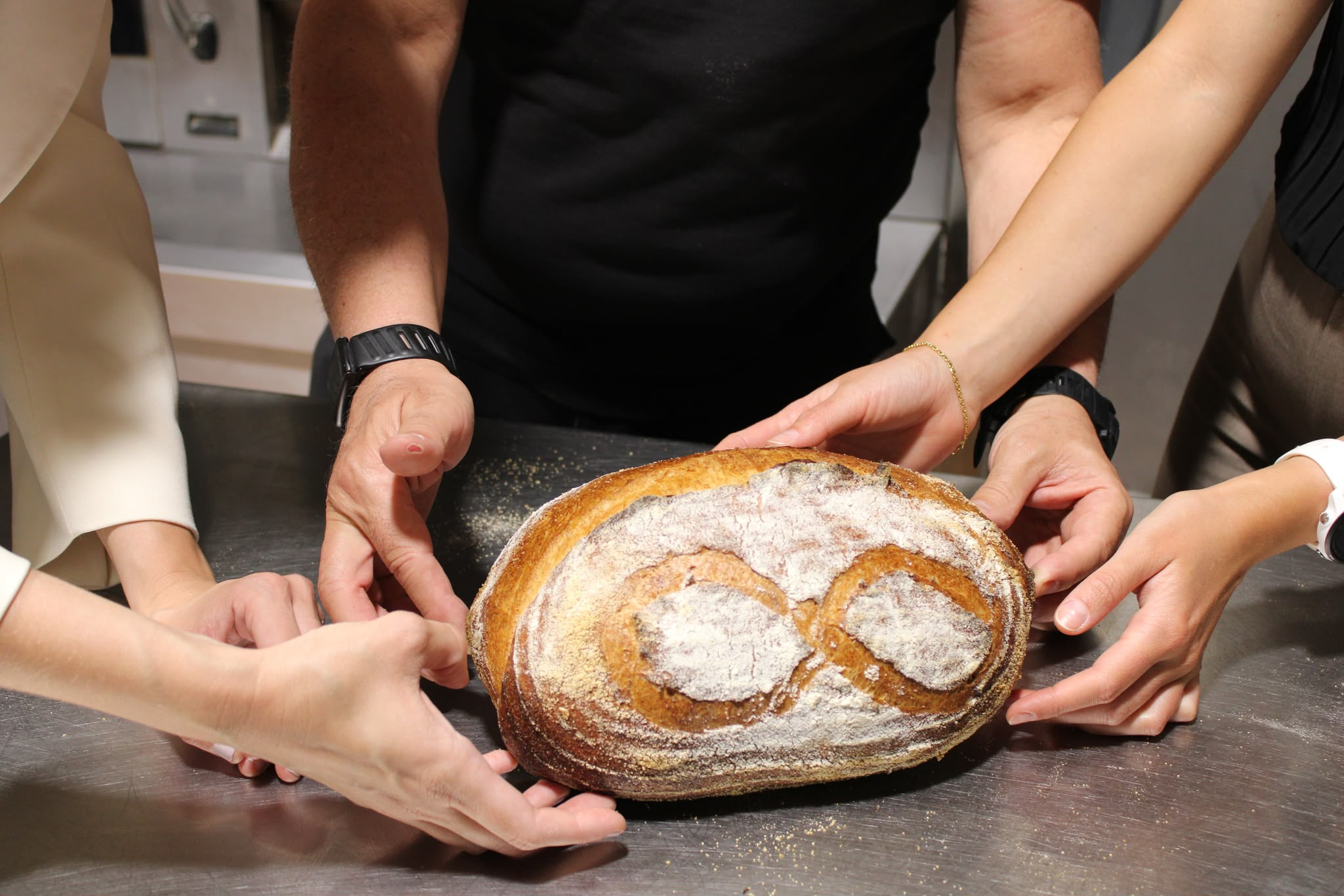
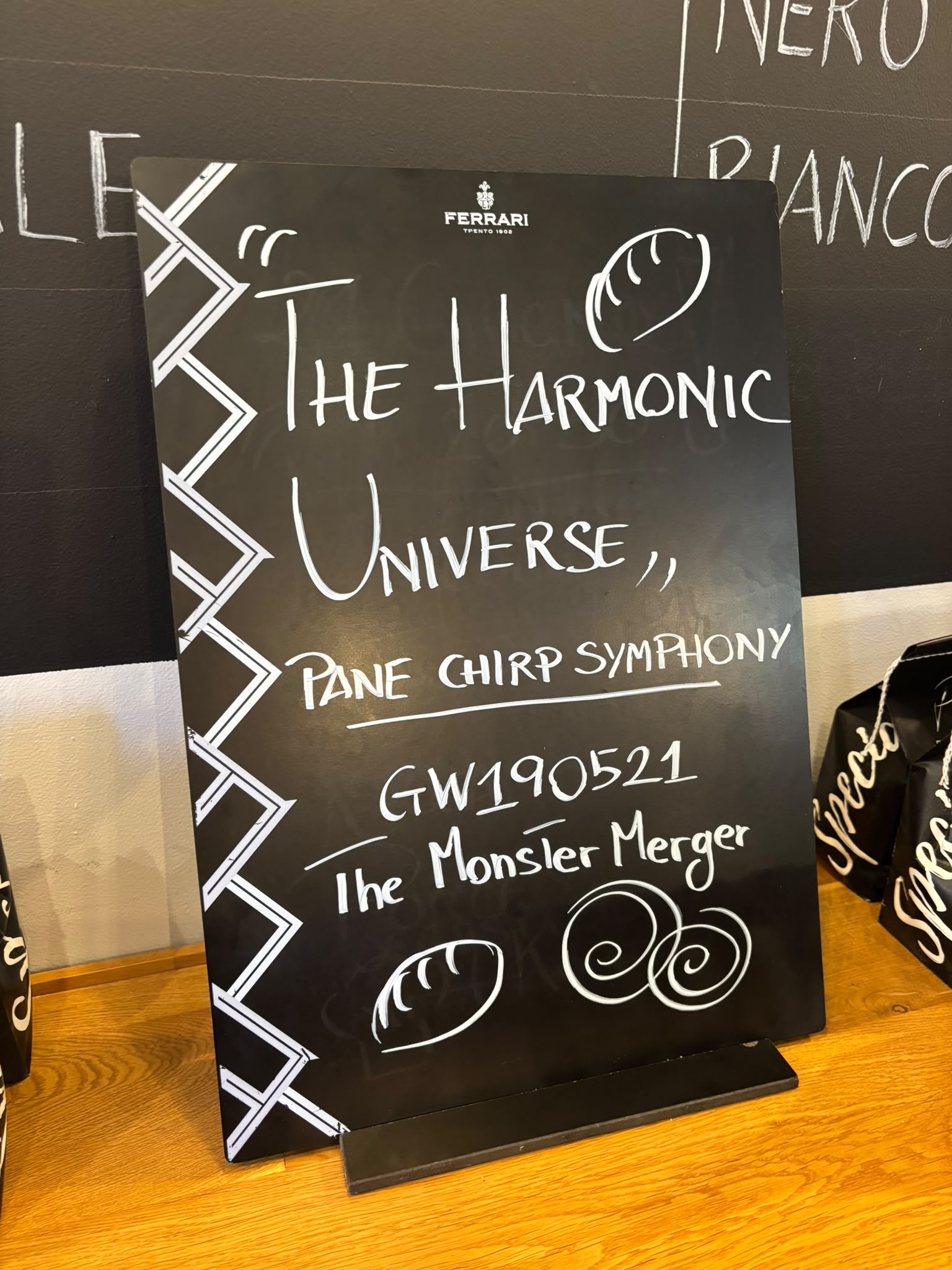
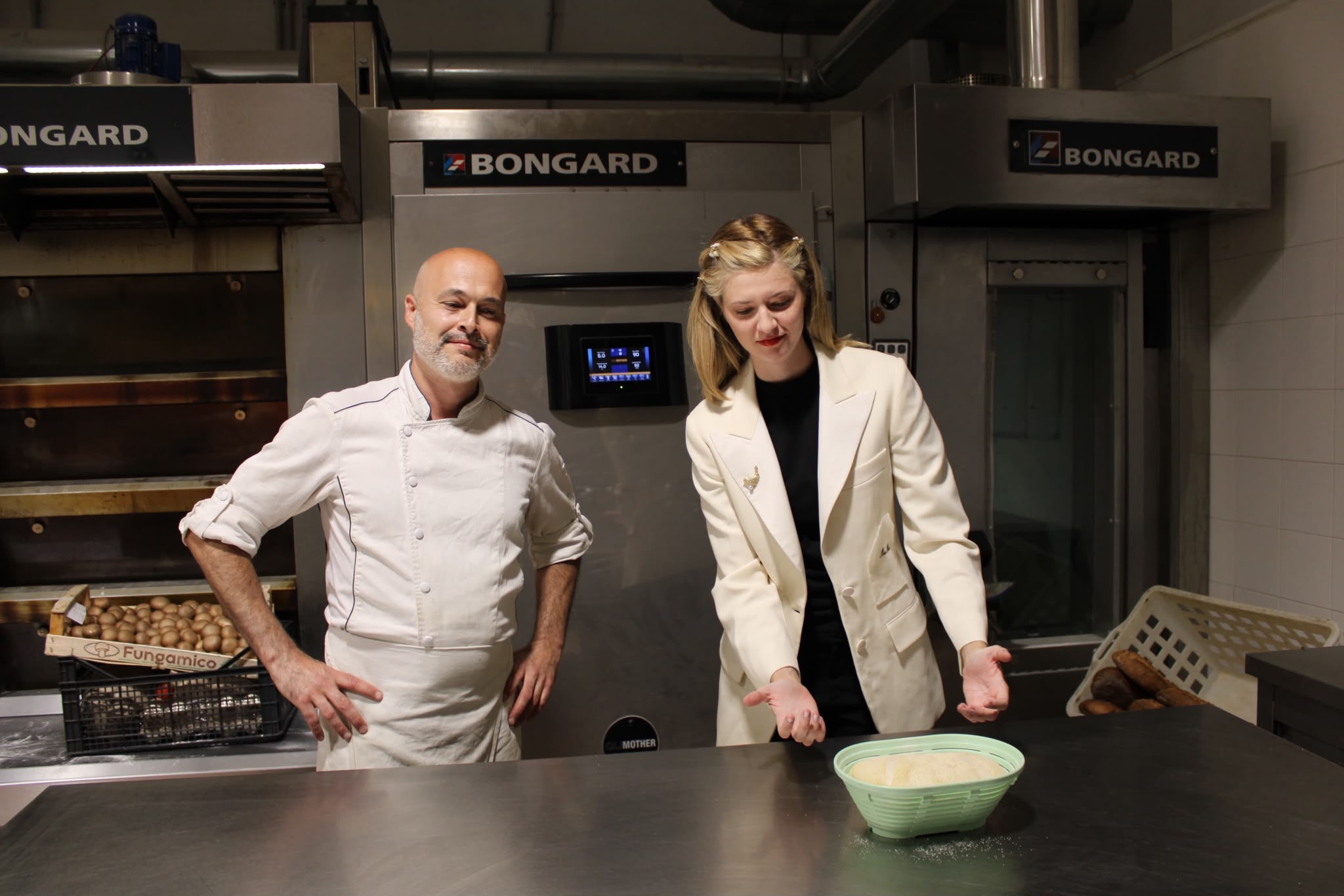
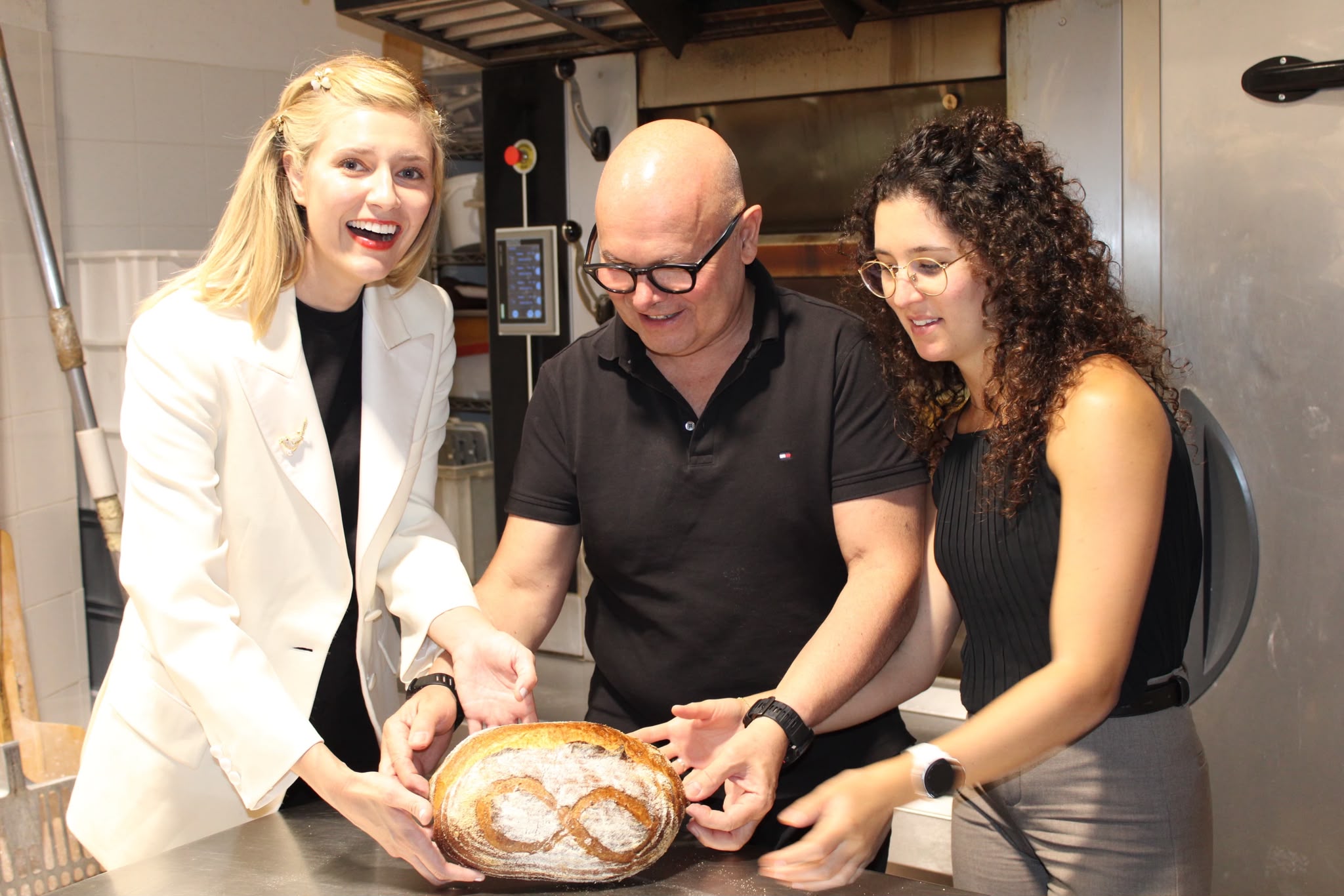
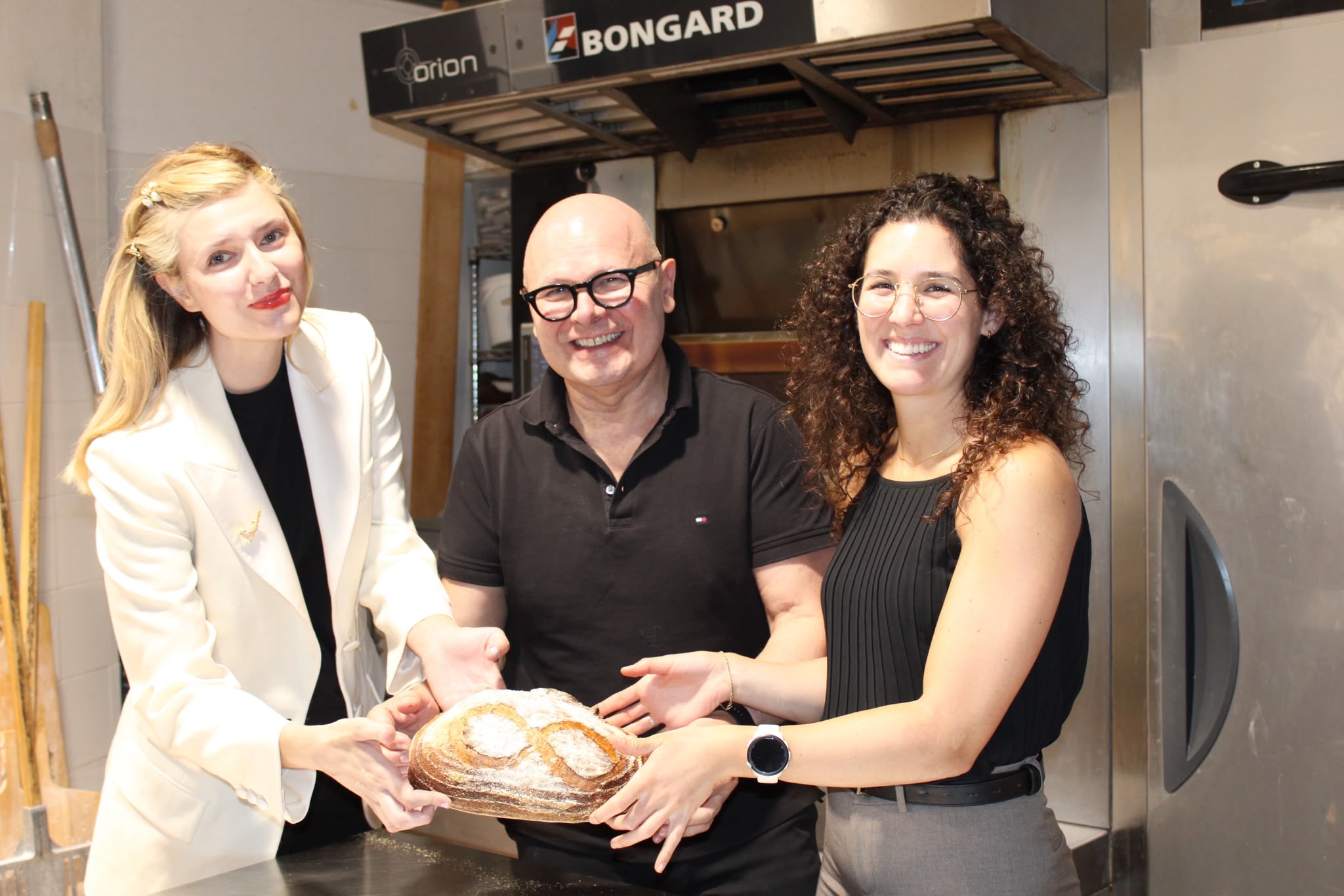
 Sonified Sourdough Using Gravitational Wave Detections (The Harmonic Universe, Chirp Symphony)
Art
 Ana Schurmann Art painting At Teatro Doglio in Cagliari, Sardegna.


 Ana Schurmann Art x Mads Exhibition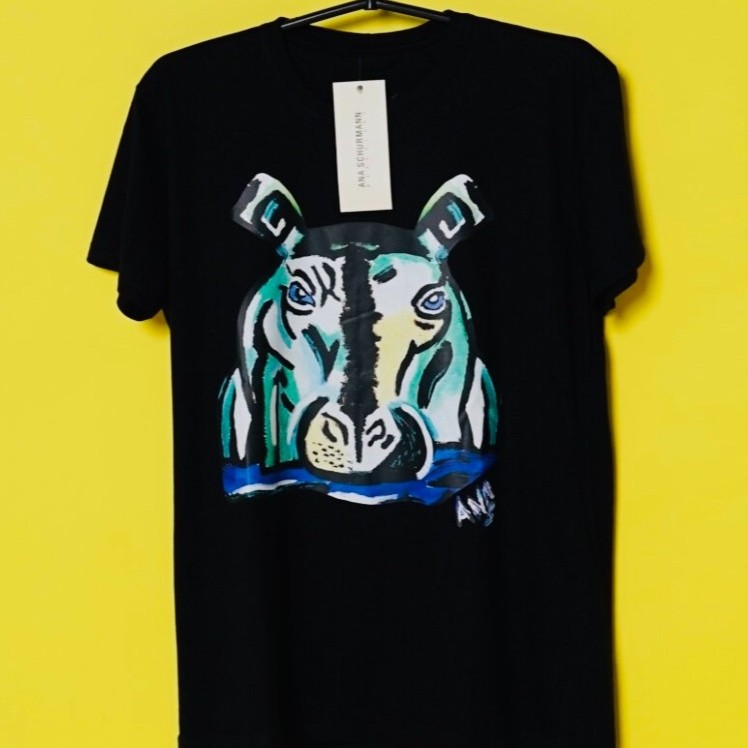





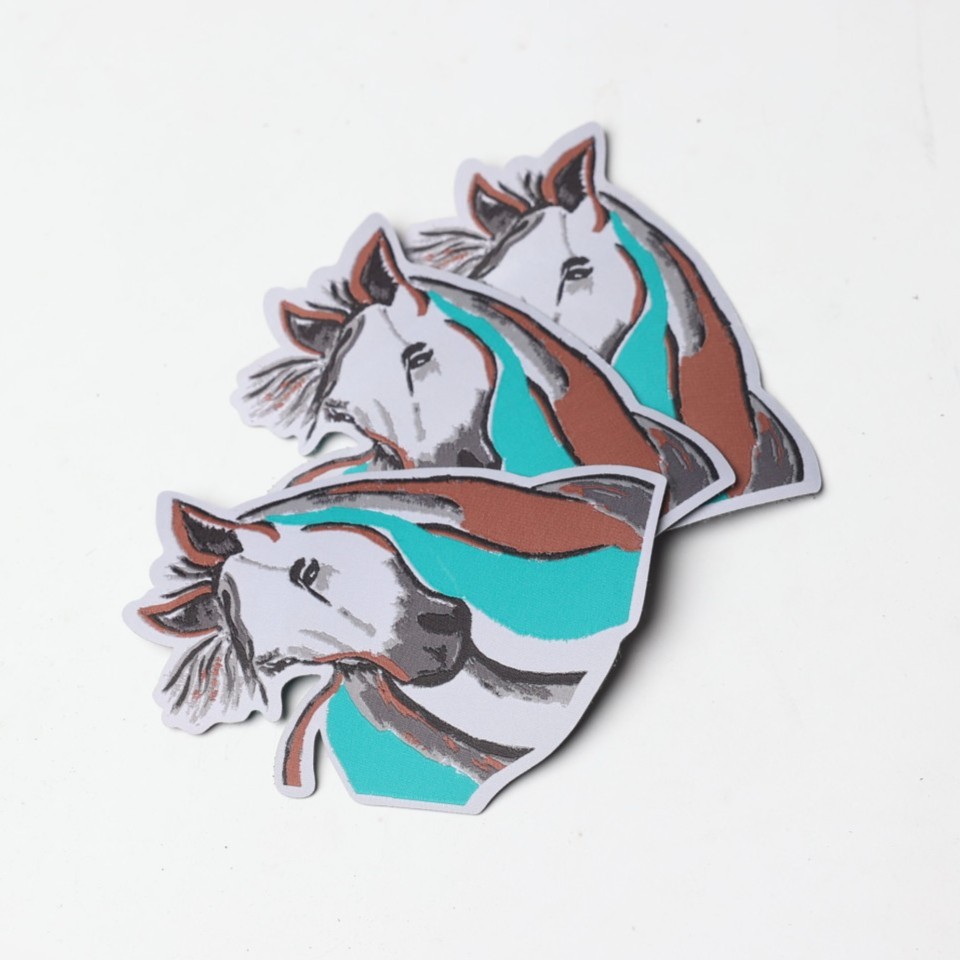
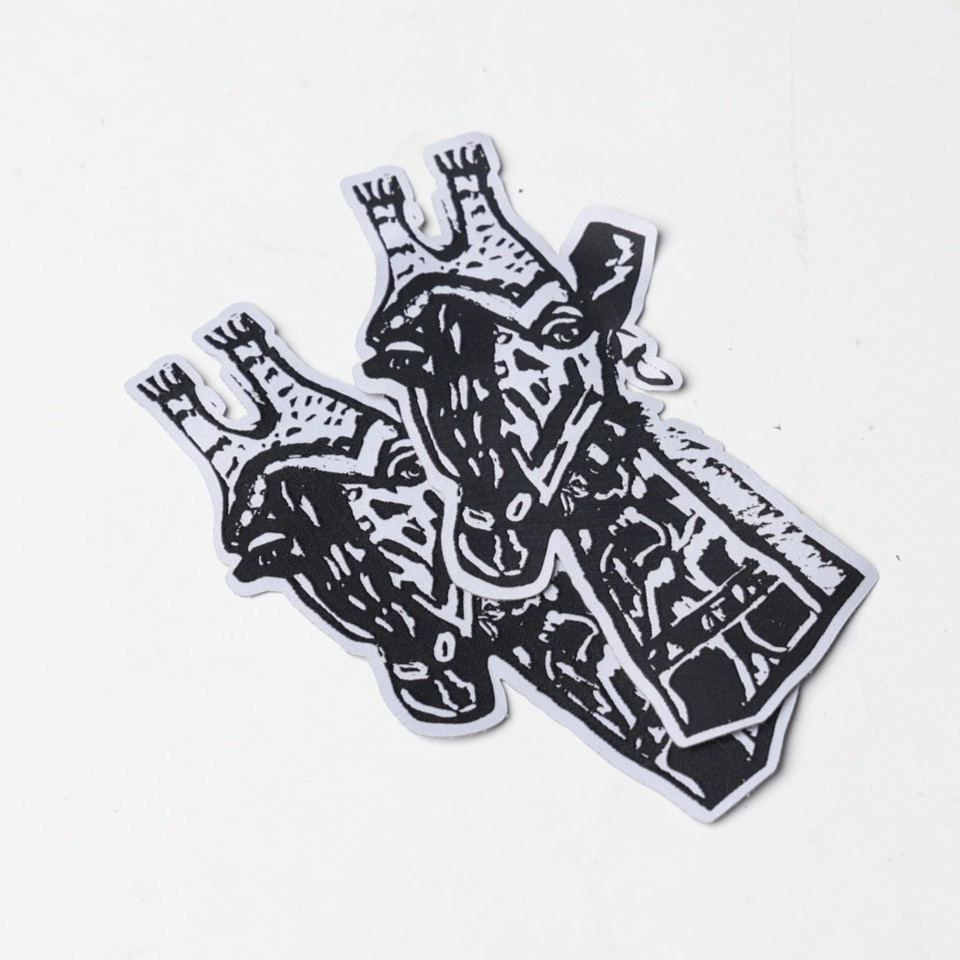
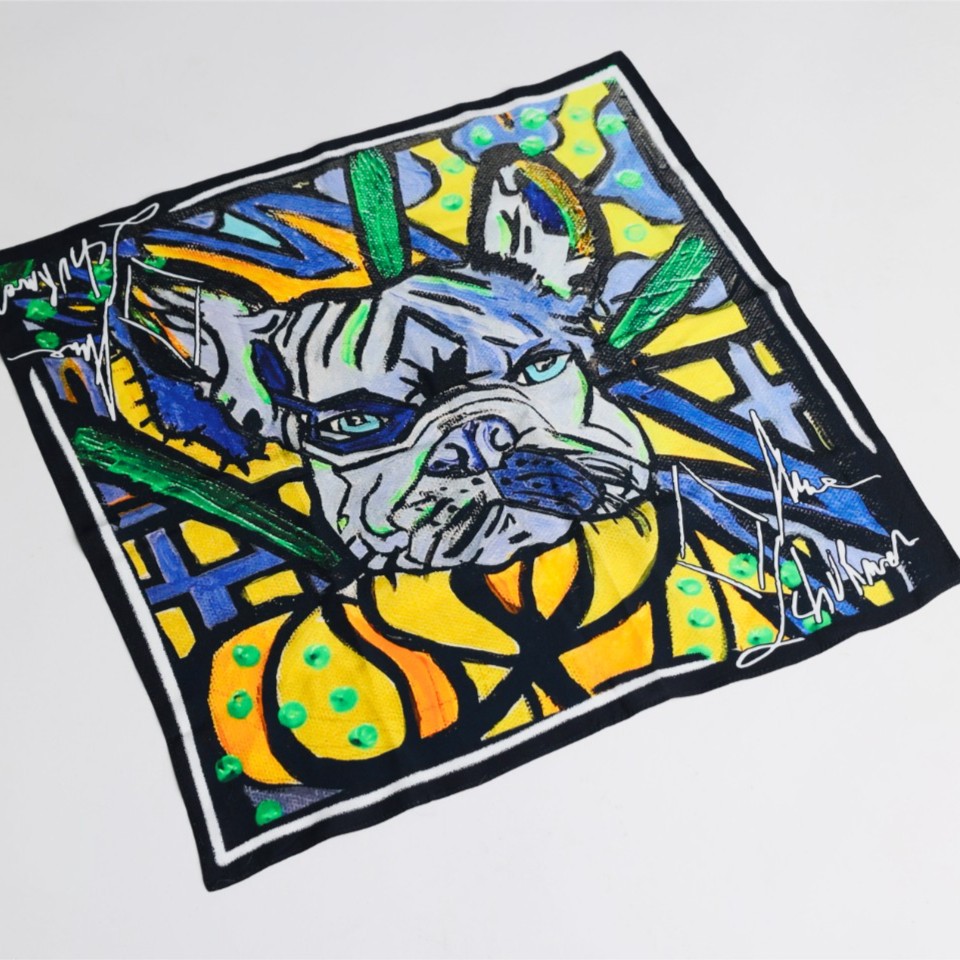


Skills
Instruments
 How fashion changed to music that changed to art and to couture and to…
 Stepping away from my own music to honor some of the greatest In full www.anaschurmannart.com
 Playing my song…
 Making new music.. fazendo música nova… flute flutemusic
 When David Bowie’s drummer and writer of “let’s dance” teaches a first-timer the drums …
 Wrote this last week. Hope the world listens.
 Did you know? MusicHistory
 Instruments


 Kung Fu practise Vs Mugendo 🥋
 Forth Kung Fu training..
 First Kung Fu training..
 SkyDive for the First time…
 Did you say holidays ?
Dance
 And the song is?
 Catwalk coreooo
 @khyrese_official 0°C today in London training choreo with the best movement director!! dancelife
Acting


Languages
 The Origins of Music (9 Language Video)
 Ana Schurmann shares her interview in 9 languages
 Ana Schurmann Interview in 10 languages
Chef
 Some delicious and honest pie
 Making a delicious dessert that I invented- strawberry mountain with creamy twists
 Making some delicious Cheesecake ! NYC Style
 Making some delicious and sweetrecipe of a pudim made of coconut
 Making some delicious chocolatecake 🍰 cake
Model
 Ana Schurmann Couture - Shot by Steven Sebring in NYC.
 BTS at L Officiel
 BTS
BTS I made a hautecouture dress… fashion
 Stream my song
Other Pursuits


Languages
Ana speaks nine languages
The Origins of Music (9 Language Video)Ana Schurmann shares her interview in 9 languagesAna Schurmann Interview in 10 languages


